Description
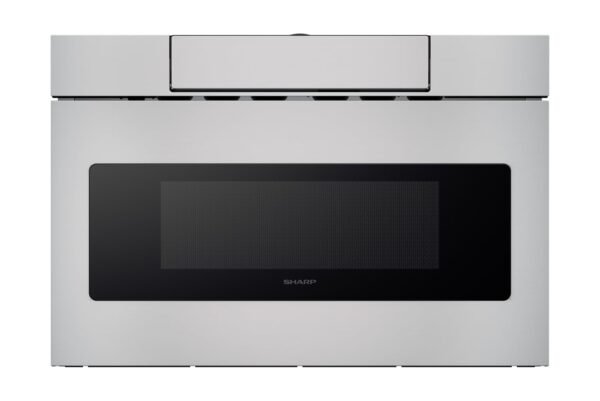
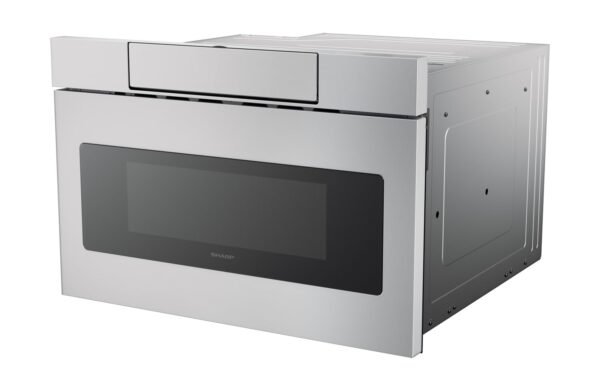
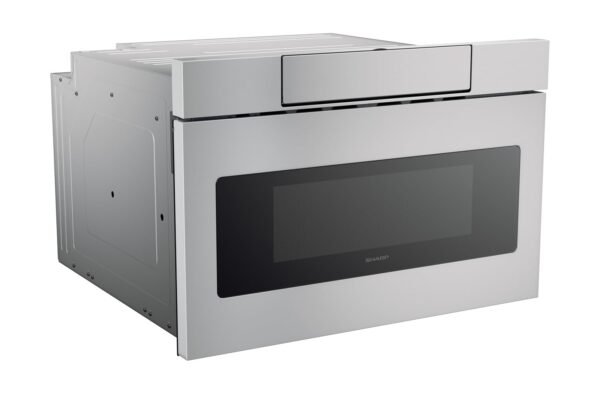
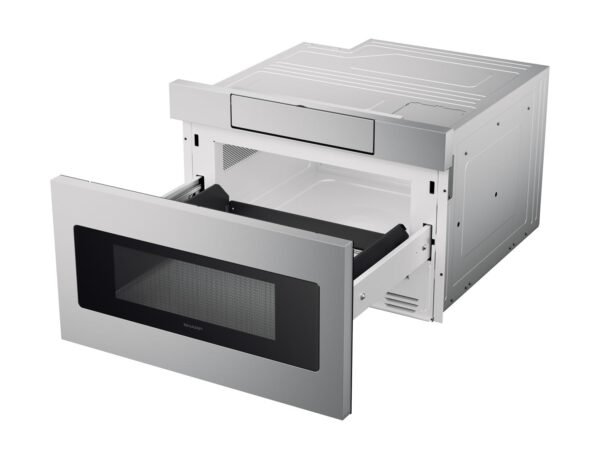
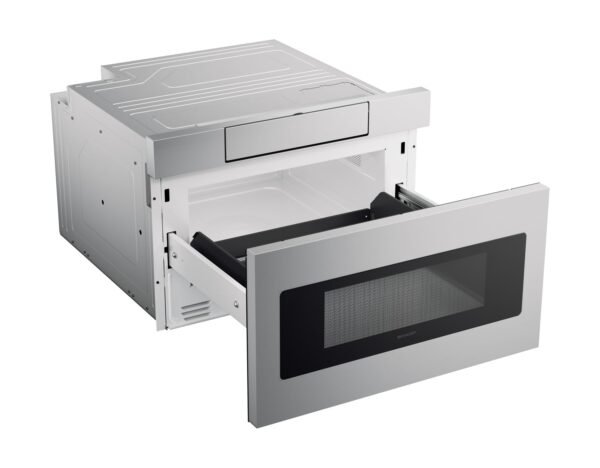
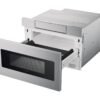
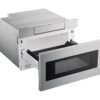
The Sharp SMD2470AS is a microwave drawer, which is a genuinely different appliance from everything else in this category even though it is filed alongside countertop models. Sharp records a 1.2 cubic foot capacity, a wattage figure of 1000, a stainless steel finish and body, a defrost feature, a residential use recommendation, and an installation type of Built-In. The unit is designed to be installed under a counter or in an island, with the cavity opening upward as the drawer slides out.
What it is and where it fits in a home
The drawer format solves a specific problem: reaching into a microwave mounted above a range is awkward and, with a full dish of hot liquid, genuinely unsafe for shorter cooks. A drawer sits at counter height or below, so a dish comes out level rather than down from shoulder height. That is the entire argument for the format and it is a strong one for anyone who has struggled with an over the range unit such as the GE JVM3160RFSS.
It also frees the wall above a range for a proper hood such as the Zephyr AK9234BS insert, which is the other structural advantage. A drawer plus a real hood does both jobs better than any single over the range unit can, at the cost of cabinet space below.
The published dimensions on this listing are impossible and should not be used. Sharp’s data gives 9 inches deep by 15 wide by 8 tall, which is physically smaller than the 1.2 cubic foot cavity it is supposed to contain. A real 24 inch microwave drawer is roughly twice those numbers in every direction. Treat the dimension field as unusable and take the cabinet opening specification from Sharp’s installation documentation, because on a built in appliance the cutout is the one measurement that cannot be wrong.
Living with it day to day
A drawer changes daily habits more than any other feature in this catalog. Dishes go in and come out flat, tall containers stand upright rather than being tilted through a door opening, and children can reach it safely or, with the lock engaged, be kept out of it entirely. Against that, you load it by looking down into it, so watching food cook means leaving it open or opening it mid cycle.
1.2 cubic feet in a drawer is not the same as 1.2 cubic feet behind a door. The usable shape is wide and shallow rather than deep, which suits plates, wide bowls and casserole dishes and does not suit anything tall the way a conventional cavity such as the Sharp SMC2266KS does. Sharp does not publish an interior height figure on this listing, which is the number that would settle that question, so it is a gap rather than something to state.
The drawer mechanism is motorized. It opens on a button press and closes the same way, which is smooth and also a moving part that a hinged door does not have. Sharp publishes no noise rating for the drawer motor, the magnetron or the cooling fan.
Controls and what still works without an app
Nothing on this model is connected. There is no Wi-Fi, no app and no voice control published, so the controls set into the drawer face are the whole interface. On a built in appliance that is arguably the right decision, because a built in unit is expected to outlive several phones and several app platforms.
The control placement is the interesting design choice here. Because the panel sits on the drawer face rather than above a door, it is at counter height and angled for someone standing over it, and it is out of sight when the drawer is closed, which is the clean look people buy the format for. The practical consequence is that you cannot glance at a countdown from across the room the way you can with a panel mounted at eye level on an over the range unit such as the LG MVEL2137F.
Running cost and upkeep
There are no filters, no water line and no drain. A drawer microwave does not vent a cooktop, so none of the grease and charcoal filter maintenance that dominates over the range ownership applies here. That is a real reduction in running cost and in things to remember, and it is one of the underrated advantages of separating the microwave from the hood.
Cleaning is different rather than harder. Crumbs and spills collect in the open topped cavity and are easy to reach, which is better than wiping the roof of a conventional microwave, but the drawer seal and the gap around the moving face need attention that a hinged door does not.
The wear items are the drawer motor and its rails, the door seal, the interior lamp and the touch panel. The motorized mechanism is the component to think about for long term ownership, since it is the part that has no equivalent in a conventional microwave and the part most likely to define the appliance’s service life.
Electrically, Sharp publishes a wattage figure of 1000 with no unit stated and no voltage at all. That is not enough information to plan an installation. A built in appliance needs a known supply and a known circuit, and neither is published here. Get both from the installation manual and the rating plate, and treat the electrical work as a job for the cabinet stage rather than something to sort out on delivery day.
Highlights
- Counter height loading, which removes the reach problem that defines the over the range format.
- Frees the wall above a range for a proper hood rather than a compromise vent.
- No grease or charcoal filters at all, so upkeep is cleaning rather than consumables.
- Controls sit on the drawer face and disappear when closed.
- Motorized opening, which is easier than a hinged door with full hands.
Things To Consider
- The published dimensions are physically smaller than the stated cavity and cannot be used.
- No voltage is published and the wattage figure carries no unit, which is not enough for an installation.
- No interior height is published, so tall container fit cannot be checked on paper.
- The motorized drawer is a moving assembly that a hinged door does not have.
- It is filed under countertop microwaves in this catalog, but it is a built in appliance.
Who it is not for
Renters and anyone unwilling to give up a cabinet run below the counter should not consider this, and a countertop unit from the countertop category is the sensible alternative. Anyone who needs the microwave to also be the hood is looking at the over the range category instead, since a drawer does no venting. Households that heat tall items regularly should confirm the interior height before committing, because the wide shallow shape is the format’s real constraint. And anyone planning the cabinetry from these published dimensions will cut the opening wrong, so the manufacturer’s installation sheet is not optional here.