



Description
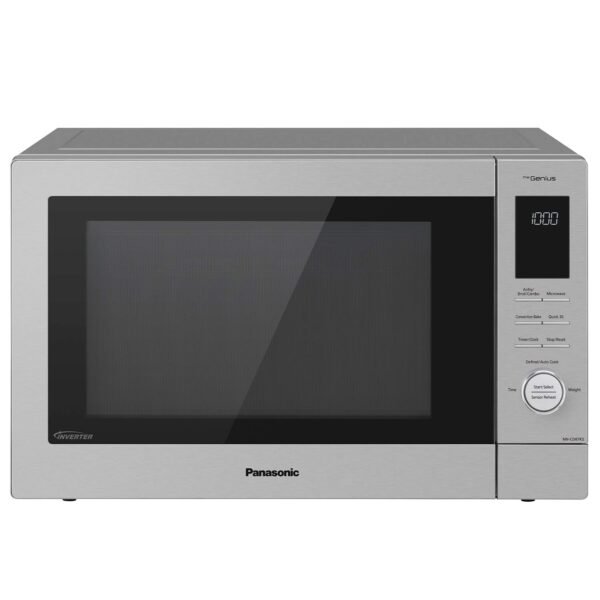
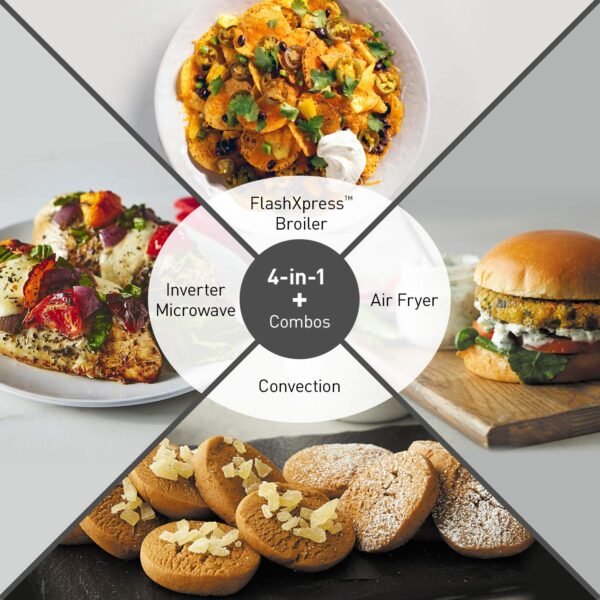
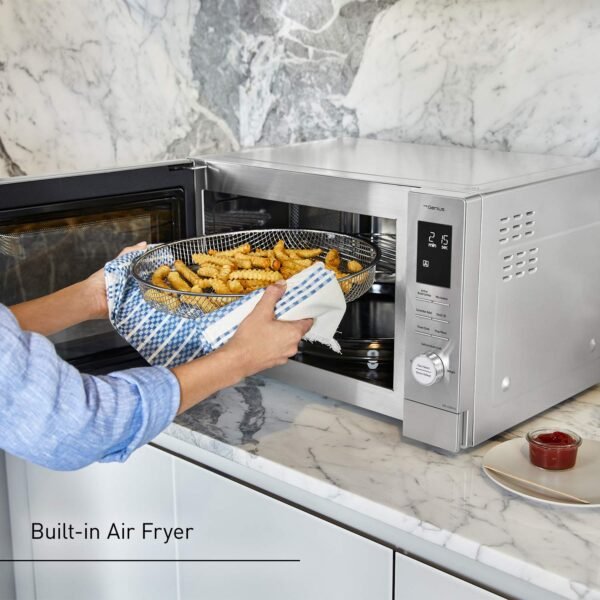
The Panasonic NN-CD87KS, sold as the HomeChef, is a countertop microwave that also bakes, air fries and broils. Panasonic records 1.2 cubic feet, 1000 watts, 120 volts, a listed weight of 39.1 pounds, dimensions of 17.7 by 22 by 13.5 inches and first availability in March 2020. The listing description adds inverter microwave technology, a convection bake function, an air fryer mode and the claim that it combines four appliances in one unit.
What it is and where it fits in a home
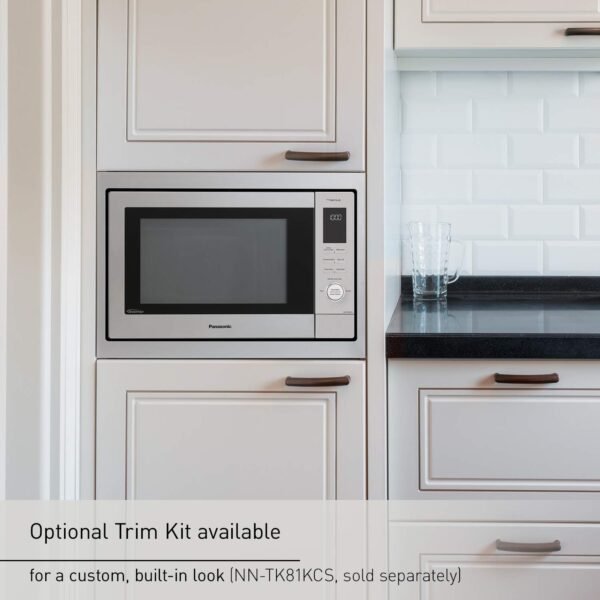
This is the appliance for a kitchen with counter space for one machine and a need for several. It suits a small kitchen where an air fryer, a toaster oven and a microwave would otherwise all be competing for the same stretch of counter, and it suits a second kitchen or a well equipped studio.
The comparison inside this catalog is the GE GCST10A1WSS, which also combines microwave, convection and air fry but in a 1 cubic foot cavity. This Panasonic gives 1.2 cubic feet and adds inverter power delivery, which is the meaningful technical difference between the two. Against a microwave only unit of the same size, such as the Toshiba EM131A5C-BS, the tradeoff is heat, cleaning and complexity in exchange for genuine cooking ability.
Living with it day to day
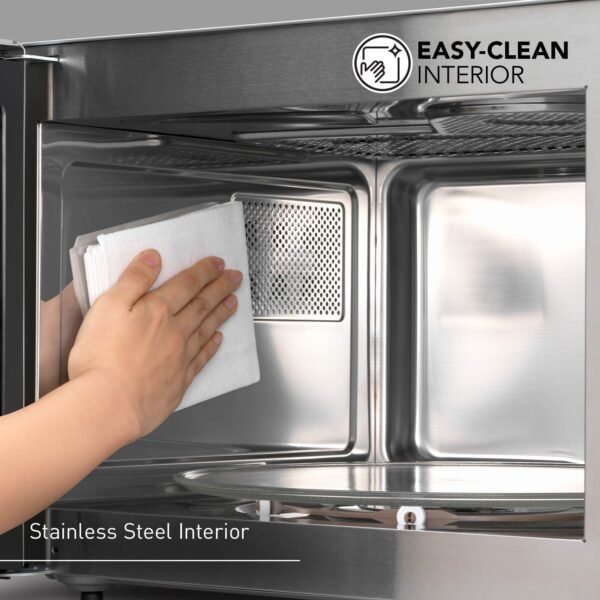
A combination microwave behaves differently from a plain one in ways that shape daily use. The cavity runs hot in convection and air fry modes, so the exterior gets hot, the unit needs real clearance on all sides, and the cooling fan runs on after a cycle ends. It also gets dirty in a way a reheating microwave never does, because browning and crisping splatter and bake on. Anyone buying this should expect to clean the cavity properly rather than wipe it.
Capacity in practical terms: 1.2 cubic feet with a rack in place takes a single layer of fries, a small tray of roast vegetables, or a couple of chicken pieces. As a microwave it takes a dinner plate. It is a one to three person cooking cavity, not a family batch appliance.
Inverter power delivery is the feature that separates this from most combination units. Rather than cycling the magnetron on and off to approximate a reduced power level, an inverter design runs it continuously at a lower level, which changes how softening, melting and gentle reheating behave. It matters to anyone who uses reduced power settings and does nothing for someone who only presses two minutes on full.
Panasonic does not publish the convection temperature range, the air fry temperature, a decibel figure or a turntable diameter on this listing. Those are the four numbers a cook would most want, and their absence is a genuine gap rather than something to fill in.
Controls and what still works without an app
There is nothing connected here. No Wi-Fi, no app, no voice control, no barcode scanning. Everything runs from the front panel, which on a four mode appliance has to do more work than on a plain microwave: selecting a cooking method, then a temperature or power level, then a time.
The practical consequence of a mode heavy interface with a fixed number of keys is that functions get layered, and the manual becomes genuinely useful rather than optional. That is a fair criticism of nearly every combination microwave. What can be said in this one’s favor is that nothing about it depends on an account or a network, so the whole feature set remains available for as long as the hardware lasts, which is not true of the app driven models in the over the range category.
Running cost and upkeep
No filters, no water and no drain, so there are no scheduled consumables. The real recurring cost is cleaning time, and it is higher than for a microwave only unit. Racks and trays need washing after air frying, and the cavity walls take browned residue.
The wear items are the turntable and roller ring, the door latch and switches, the interior lamp, the convection fan motor, the heating element and the inverter board. That is a longer list than a plain microwave has, and each of the last three is a component a simple unit does not carry at all. Anyone buying a combination appliance is accepting more that can fail in exchange for the versatility, and that is the honest framing.
Electrically, Panasonic publishes 120 volts and 1000 watts. It does not publish the input draw in convection or air fry mode, which is the higher figure on any unit with a heating element and the one that matters for circuit loading, and it does not publish the amperage or a dedicated circuit requirement. A 39 pound appliance running a heating element and a fan on a shared kitchen circuit alongside a kettle is a realistic way to trip a breaker, so the rating plate is worth reading before deciding where to plug it in.
Highlights
- Four cooking methods in one footprint, which is the whole argument for the appliance.
- Inverter power delivery, which most combination microwaves do not offer.
- 1.2 cubic feet is larger than most combination units at this size.
- Voltage and wattage both published, unlike many listings in this catalog.
- Entirely local operation, so the full feature set survives any app decision.
Things To Consider
- No convection or air fry temperature range is published, which are the numbers a cook needs.
- Input draw in convection mode, amperage and circuit requirement are all unstated.
- Air frying and roasting make the cavity dirty in a way reheating does not.
- The element, convection fan and inverter board are additional components that can fail.
- A mode heavy interface on a fixed keypad means the manual is not optional.
Who it is not for
A household that already owns a good oven and an air fryer gains little and gives up simplicity. Anyone who reheats family sized dishes needs more cavity, and the 2.2 cubic foot Sharp SMC2266KS covers that. Anyone who wants the microwave off the counter is in the wrong format and should look at the countertop category. And anyone shopping primarily on reliability should weigh the extra components honestly, because a plain inverter microwave such as the Panasonic NN-SN686S has fewer things in it that can stop working.