

Description
What this Farberware microwave is and where it fits
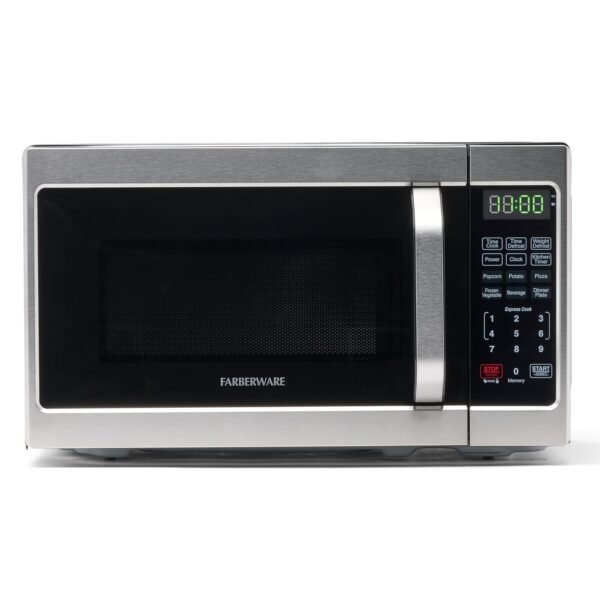
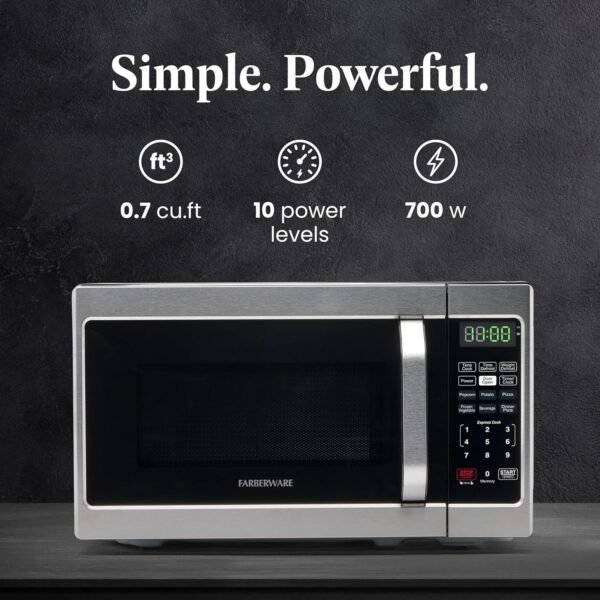
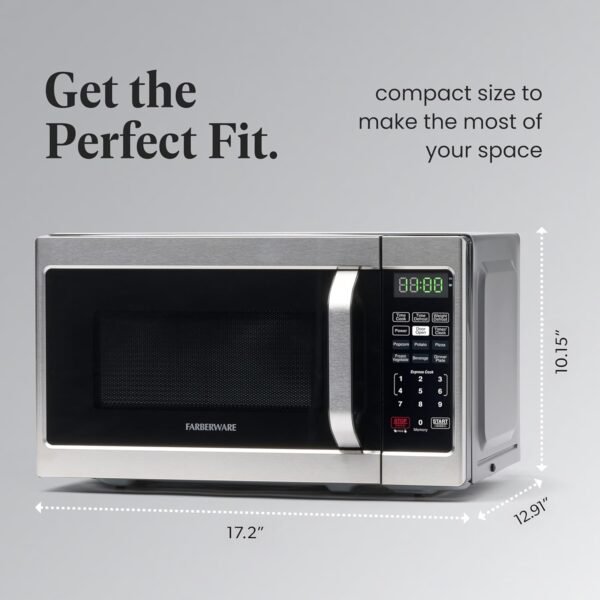
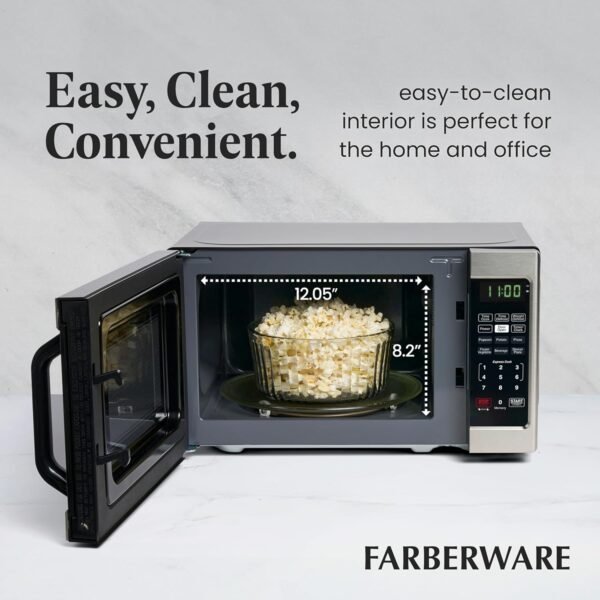
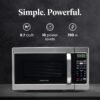
Zero point seven cubic feet is the smallest practical microwave size, and this is a good example of the class: 12.99 by 17.3 by 10.14 inches, 22.5 pounds, stainless steel, with 700 watts of cooking output. It takes a dinner plate and not much more, and it belongs in a dorm room, an office break room, a studio apartment, a garage workshop or a second kitchen. Farberware pitches it at apartments and dorms, and that is an accurate description of where a machine this size makes sense rather than a compromise.
Living with it day to day
Seven hundred watts is the honest limitation and it should be understood before buying. A full size microwave produces 1000 to 1200 watts, and the difference shows up as time: everything takes noticeably longer, and package instructions written for a 1000 watt oven need adjusting upward. For reheating coffee, a plate of leftovers or a bowl of soup, 700 watts is entirely adequate. For cooking anything from raw, it is slow.
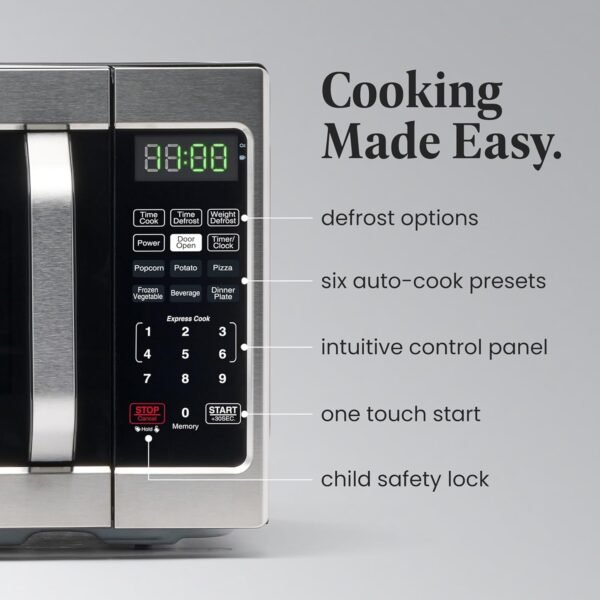
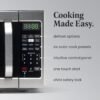
Ten power levels is a generous count at this price, and it matters more than the headline wattage for anything delicate, because defrosting and softening butter depend on a low setting rather than a short burst at full power. Six one touch programs cover the common items, and a memory function lets a frequently used combination of time and power be saved, which is a feature usually found on larger machines. The digital display shows a clock and a countdown timer as well as remaining cook time. Farberware publishes no decibel rating, which on a compact machine destined for an office or a studio is a real gap, because a microwave running for three minutes in a small room is the loudest thing in it. What can be said is that a 700 watt magnetron and the small cooling fan that goes with it are physically smaller than the equivalents in a full size machine, so the noise character is a higher pitched hum rather than a deep one. The over the range alternative, which also ventilates a cooktop, is the GE JVM3160DFCC, and larger countertop options include the Farberware FM11BKBSS and the Toshiba EM131A5C-BS.
Controls and connected features
There is no connectivity, no app and no account, which at this size and price is exactly right. Everything is on a membrane keypad with a digital display, and a membrane keypad is the most robust interface a microwave can have because it seals against spills and survives being pressed with a greasy thumb. Nothing here can be discontinued and nothing needs updating.
The child safety lock is the feature worth calling out, because it is not universal on compact microwaves and it is the one that matters in a shared house or a home with small children. Once engaged it prevents the oven starting, which turns an appliance a child can reach into one they cannot operate. The easy grip handle is a genuine design choice as well: many compact microwaves use a push button door release, which is harder to operate with wet hands and is a common failure point.
Running cost and upkeep
The electrical figures are published clearly: 120 volts at 700 watts. That is an ordinary North American household outlet with no dedicated circuit implied, no hardwiring, no gas and no venting. One point worth understanding is that the 700 watt figure is the cooking output rather than the input draw. Every microwave consumes more electricity than it delivers as cooking power, and the input figure is not published here, so anyone planning to run this alongside a kettle or a toaster on the same circuit should allow for more than 700 watts of load.
There are no consumables, no filters and no maintenance schedule. Upkeep is wiping the cavity, which is easier here than on many microwaves because the interior is stainless steel rather than painted, and cleaning the turntable. A microwave that is wiped after spills lasts far longer than one that is not, because baked on food absorbs energy and creates hot spots that damage the cavity wall over time. The turntable itself is the other part worth looking after, since a chipped roller ring makes the plate wobble and eventually stop turning, which produces unevenly heated food long before anything actually fails. There is no venting requirement, though the machine does need clearance around it for its cooling fan, and the listing does not publish that clearance figure. One data oddity: the item model number field simply reads Farberware rather than a model code, so this unit cannot be identified by model, which makes ordering a replacement turntable or comparing it against a similar Farberware machine unnecessarily difficult. The rest of the category sits under countertop microwave ovens, and built in alternatives include the GE JK3800SHSS combination wall oven.
Highlights
- Electrical details published at 120 volts, so it plugs into any household outlet.
- Ten power levels, which is generous for a compact machine.
- Child safety lock, which is not universal at this size.
- Easy grip door handle rather than a push button release.
- Memory function for saving a frequently used time and power setting.
- Stainless steel interior, which wipes cleaner than a painted cavity.
Things To Consider
- 700 watts is well below a full size microwave, so everything takes longer.
- Package instructions written for 1000 watt ovens need adjusting.
- The input draw is higher than the 700 watt output figure and is not published.
- The model number field reads Farberware rather than a model code.
- No clearance requirement is published for the cooling fan.
- No decibel rating is given.
Who it is not for
A family kitchen should buy a full size microwave, because 0.7 cubic feet will not take a casserole dish and 700 watts turns every reheat into a longer wait. Anyone cooking from raw in a microwave regularly needs more power. Households that want the microwave to also ventilate the cooktop need an over the range model instead. And anyone matching a kitchen of built in appliances will find a countertop machine occupies exactly the worktop space they were trying to free.