Description
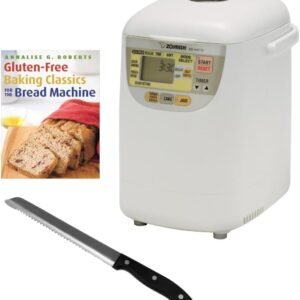
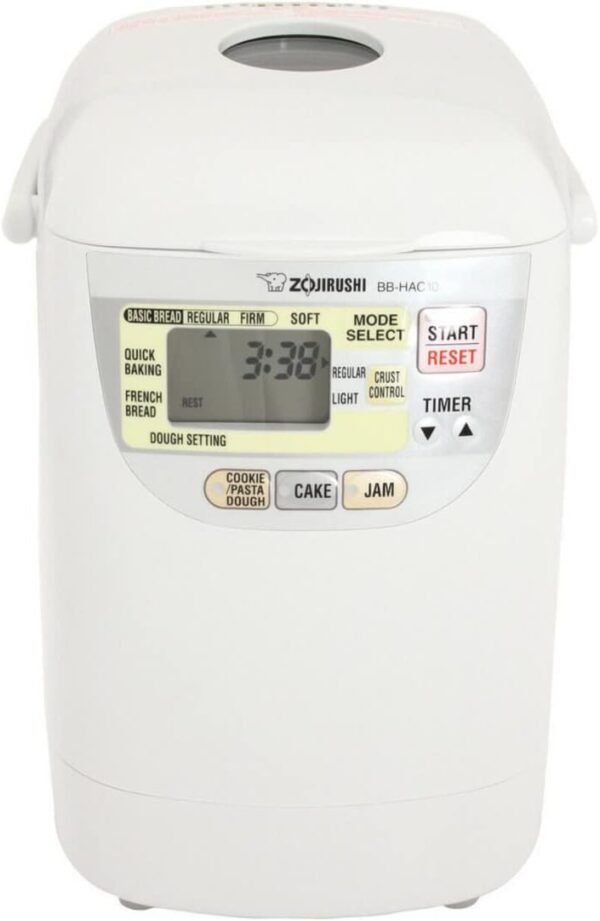
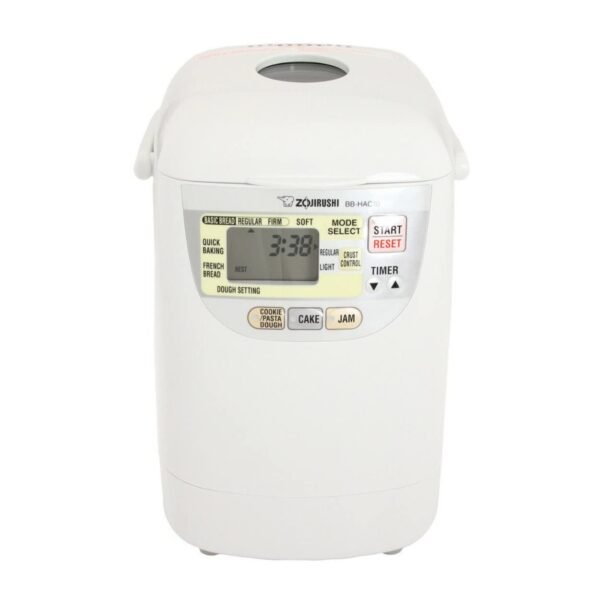
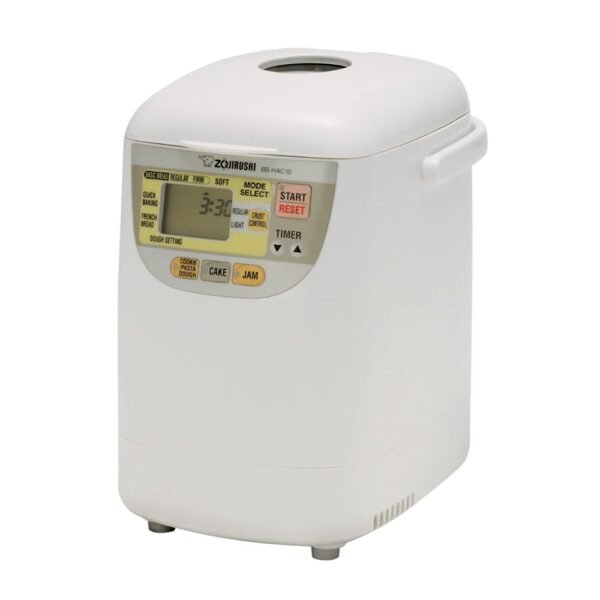
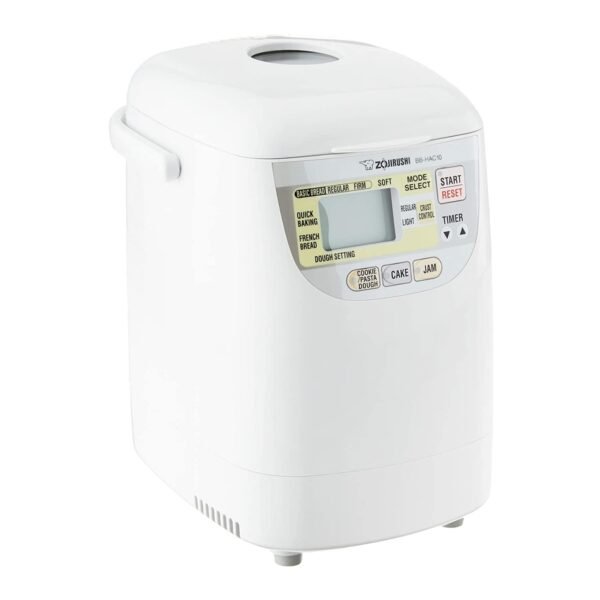
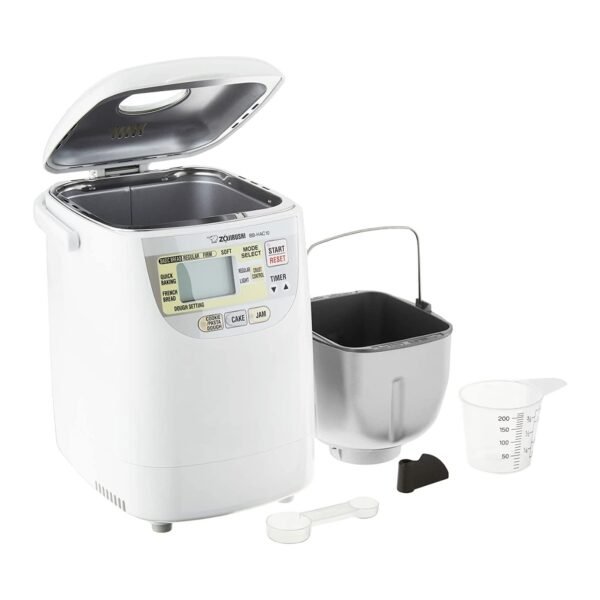
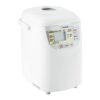
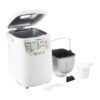
This is the third listing in this catalog for the Zojirushi BB-HAC10, alongside a gluten free bundle listing and a three item bundle listing, and it is the one with the most credible physical data. Zojirushi records a white color, dimensions of 11.25 inches deep by 8.5 wide by 12.25 tall, 450 watts, hand wash only care and first availability data. The description adds 1 pound loaves, a quick bake cycle under two hours, a nonstick kneading blade and baking pan, and a 13 hour delay timer.
Two specification entries are malformed and repeat their own labels as values, which is how the voltage and material fields have ended up unusable. They appear to indicate 120 volts and stainless steel, but neither is recorded reliably.
What it is and where it fits in a home
The dimensions on this entry are the ones to plan from. At 8.5 inches wide, 11.25 deep and 12.25 tall, this is a genuinely compact appliance and it matches the machine’s own claim elsewhere of needing under a foot of counter. The other two listings for the same model give 18.2 by 14.3 by 12.5 inches and 20.1 by 15.9 by 16.2 inches, both of which are shipping cartons rather than the appliance.
An 8.5 inch wide bread machine fits in a run of counter that nothing else will use, which is the point of the format. Against the 18 inch Zojirushi BB-PDC20BA it takes less than half the width, and it makes half the loaf.
Living with it day to day
A 1 pound loaf is the right size for one or two people. It is baked in a tall narrow pan, so the slices are small and square rather than the long sandwich shape a horizontal dual blade machine produces. That suits toast and breakfast better than packed lunches, and it is a real difference in what the bread is good for rather than a minor detail.
The 13 hour delay timer is the most used feature on any bread machine, and 13 hours covers any overnight schedule: load at eight in the evening and the loaf is ready at seven. The kneading happens in the small hours, which is audible in a quiet house and is worth knowing before the first attempt.
The quick cycle under two hours is faster than the two and a half hours a full sized machine takes. The same honest caveat applies as everywhere: a short cycle is a short rise, so it produces bread rather than good bread, and it earns its place as an option rather than a default.
450 watts is the lowest published figure among the bread machines here, which follows from the smaller pan and smaller loaf. It also means a longer bake phase for the same browning, which is part of why the standard cycles on compact machines are not shorter than on large ones.
Controls and what works without an app
Nothing here is connected. No Wi-Fi, no app, no account. A panel with a delay timer is the whole interface, and it works with the machine plugged in.
The delay timer is worth dwelling on because it is the feature that a connected appliance would sell as remote scheduling. A 13 hour timer does the same job with a clock, and it will keep doing it for the life of the machine regardless of what happens to any manufacturer’s app platform. On an appliance whose cycles run for hours and which people expect to keep for a decade, local scheduling is the more durable design.
The malformed voltage field on this listing is a reminder that even the electrical basics on these entries should be checked against the appliance rather than the page.
Running cost and upkeep
Ingredients are the running cost and there is nothing else on a schedule.
The kneading blade and the nonstick pan coating are the wear items on every bread machine, and this catalog carries a replacement paddle for a different brand which illustrates that these are routinely replaced parts rather than permanent ones. A single blade machine has one shaft and one seal, which is one fewer failure point than a dual blade design.
Hand wash only is the stated care instruction. On a nonstick pan that means no dishwasher, and no metal utensil to lever out a loaf that has stuck. Both are the standard ways these pans are ruined, and on a compact machine the pan is a larger share of the whole appliance than it is on a full sized one.
Electrically, this listing publishes 450 watts, the only wattage figure across the three BB-HAC10 entries. The voltage field is malformed and unusable, and no amperage is published. 450 watts sustained over a three hour cycle is a modest but continuous load, which makes it one of the easier appliances in this catalog to place on a shared kitchen circuit, though the rating plate remains the source.
Highlights
- Credible dimensions at 8.5 inches wide, unlike the other two listings for this model.
- 450 watts is published, the only wattage figure across the three entries.
- A 13 hour delay timer, long enough for any overnight schedule.
- A 1 pound loaf, which suits one or two people and reduces waste.
- One kneading blade, so one fewer shaft and seal than a dual blade machine.
Things To Consider
- Two spec fields are malformed and repeat their labels as values.
- Three listings for the same machine exist here with conflicting specifications.
- A tall narrow pan makes small square slices rather than sandwich shapes.
- Hand wash only, and the nonstick pan is easily ruined.
- Overnight kneading is audible in a quiet house.
Who it is not for
A family will find a 1 pound loaf inadequate and should look at a 2 pound machine in the bread machine category. Anyone who wants sandwich shaped slices needs a horizontal dual blade pan. Anyone who wants programmable custom cycles should compare the Breville BBM800XL. And anyone comparing the three listings for this model will find three different specifications, so Zojirushi’s own documentation is the only reliable source.