Description
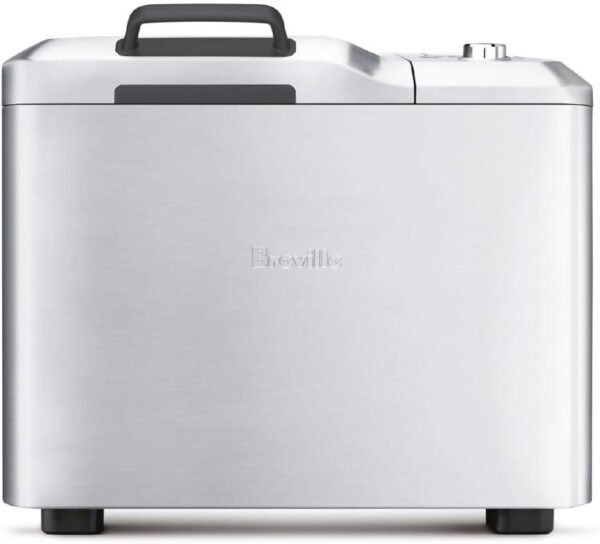
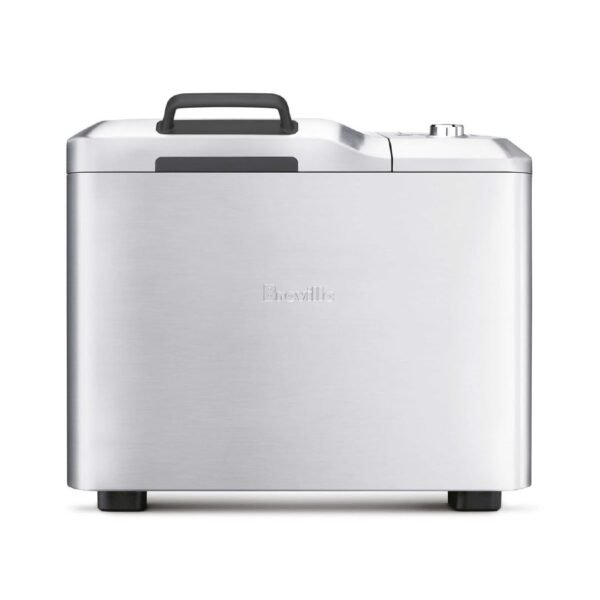
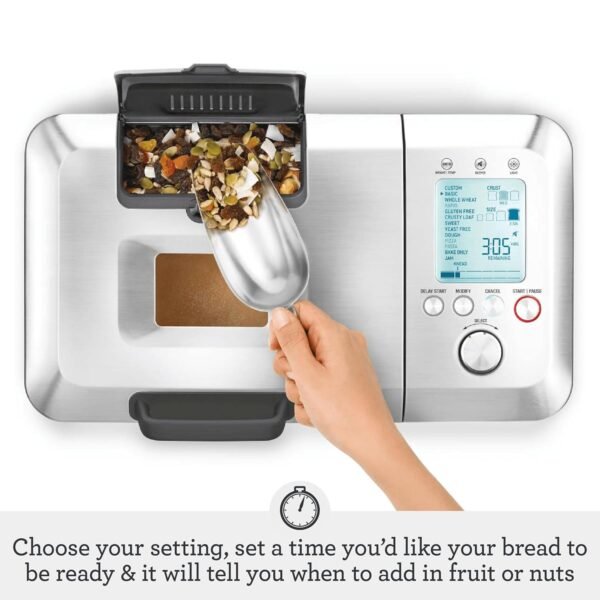
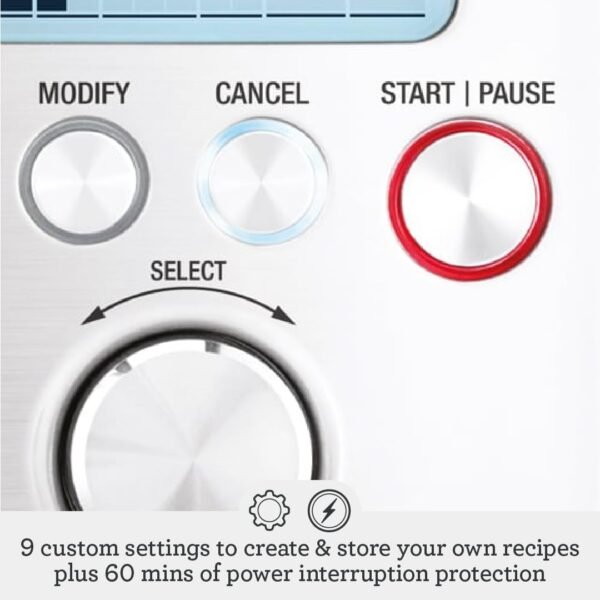
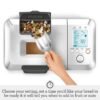
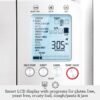
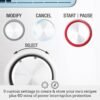
The Breville BBM800XL, sold as the Custom Loaf, is the most programmable bread machine in this catalog. Breville records 830 watts, 13 programs, a brushed stainless steel finish, dimensions of 9.6 inches deep by 16.4 wide by 13.3 tall, hand wash only care, a listed weight of 16.84 pounds, a China country of origin, model number BBM800XL and first availability in March 2012. The description adds nine custom settings alongside the 13 automatic ones, a smart LCD display that guides the process, an automatic fruit and nut dispenser, and power interruption protection.
What it is and where it fits in a home
This is aimed at someone who wants to control the process rather than press a button. 13 automatic programs is a wide range, and the nine custom settings are the real distinction: they allow the kneading, rising, resting and baking times to be adjusted and saved, which turns the machine from an appliance into a tool.
At 16.4 inches wide it sits between the compact Zojirushi BB-HAC10 and the 18 inch Zojirushi BB-PDC20BA. The 9.6 inch depth is the narrowest of the full sized machines here, which matters on a counter where depth rather than width is the constraint.
Living with it day to day
The automatic fruit and nut dispenser is the feature that most changes the daily experience, and it solves a problem anyone who has made fruit bread knows. Fruit and nuts added at the start get pulverized by the kneading and bleed color through the dough. Added at the right moment, they stay whole. Doing that by hand means standing by the machine for a beep at an unpredictable point in a three hour cycle. A dispenser does it while you are out.
The custom settings are the other genuine capability. Being able to lengthen a rise, shorten a knead or change a bake time and then save it means a recipe that does not work on a stock program can be made to work, which is the difference between a machine that bakes its own recipes and one that bakes yours. It also means the manual matters more here than on a simpler machine.
Power interruption protection is an underrated inclusion. A three hour cycle interrupted by a brief outage on most machines means a ruined loaf. A machine that resumes where it left off does not.
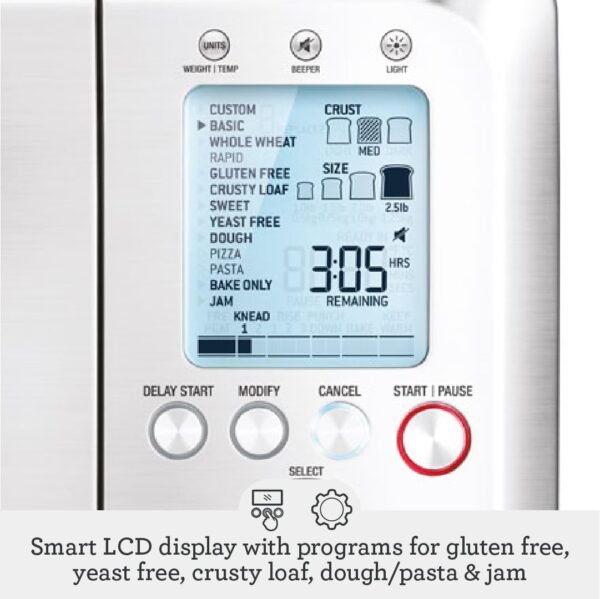
The LCD guiding the process through each stage is a practical addition on a machine with 22 possible configurations, because it tells you what phase the dough is in rather than only how long is left.
Breville publishes no noise figure. Kneading is audible, and on a machine with a dispenser there is also a mechanical release partway through the cycle.
Controls and what works without an app
There is nothing connected. No Wi-Fi, no app, no account. The LCD and its keypad are the whole interface, and every one of the 13 programs and nine custom settings lives in the machine.
On a programmable appliance that is the important architectural point. A machine that stored custom recipes in a phone app would lose them when the app was retired, and a bread machine bought in 2012 that depended on a 2012 app would be a plain machine by now. Breville kept it local, so a custom program saved today will still run in a decade.
The tradeoff of 22 settings on a small LCD is that the interface takes learning. This is not a machine to be operated without reading the manual, unlike the simpler machines in this catalog such as the compact Zojirushi or the eight program Oster 5838, and that is the honest cost of the flexibility.
Running cost and upkeep
Ingredients are the running cost. Nothing else is on a schedule.
The kneading paddle and the nonstick pan coating are the wear items on any bread machine, and this catalog carries a replacement paddle to illustrate that paddles are routinely replaced parts. The dispenser adds a second maintenance point: it is a compartment that holds sticky fruit and oily nuts and then opens mechanically, so it needs cleaning after every use in which it is used, and residue left in it will eventually stop it releasing properly.
Care is hand wash only. On a nonstick pan that means no dishwasher and no metal utensil to free a stuck loaf, which are the two standard ways these pans are destroyed.
Electrically, Breville publishes 830 watts, which is the highest published figure among the bread machines here and consistent with a machine that bakes as well as kneads. No voltage and no amperage are published. A bread machine heats for a sustained period rather than in bursts, so 830 watts is a real continuous load on a kitchen circuit, and it is worth reading the rating plate before running it alongside a kettle on the same outlet.
Highlights
- An automatic fruit and nut dispenser, which solves a problem no timer can.
- Nine custom settings that adjust and save knead, rise and bake times.
- Power interruption protection, so a brief outage does not ruin a three hour cycle.
- An LCD that reports the current stage rather than only the time remaining.
- All 22 configurations stored locally, so nothing depends on an app.
Things To Consider
- 22 settings on a small LCD means the manual is not optional.
- The dispenser is a second thing to clean and will jam if residue is left in it.
- No voltage or amperage is published for an 830 watt sustained load.
- Hand wash only, and the nonstick pan is easily ruined by a dishwasher.
- No noise figure is published, and the dispenser adds a mechanical release mid cycle.
Who it is not for
Anyone who wants to press one button and walk away is paying for programmability they will never touch, and a simpler machine in the bread machine category does the same daily job. Households of one or two will find a full sized loaf too much and should look at the compact options. Anyone baking gluten free should compare against a machine with a dedicated course. And anyone who never adds fruit or nuts is buying a dispenser to clean rather than to use.