Description
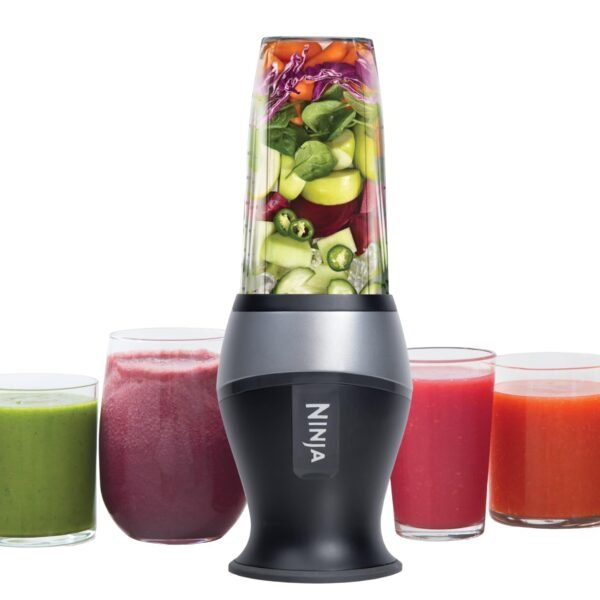
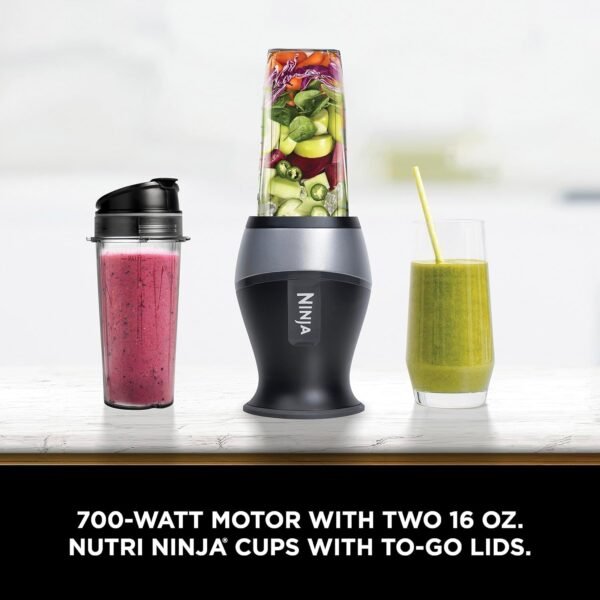
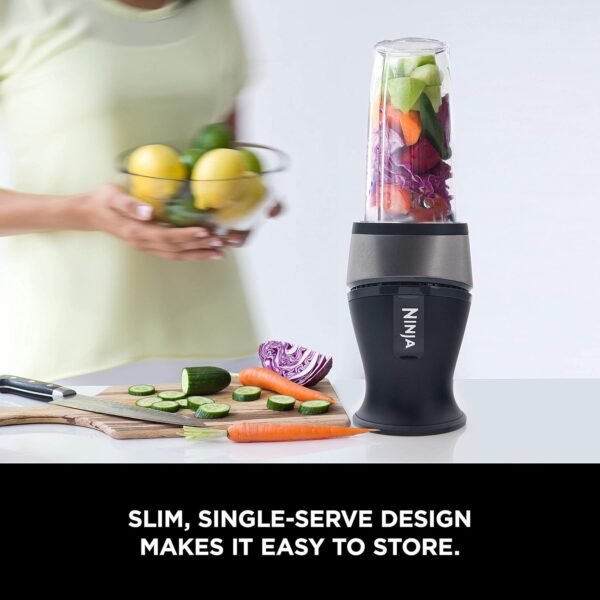
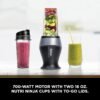
The Ninja QB3001SS, sold as the Ninja Fit, is the smallest blender in this catalog and the only one filed as a personal size machine. Ninja records a 16 fluid ounce capacity, dimensions of 4.3 inches deep by 4.3 wide by 13 tall, a black color, a compact designation, pulse technology and a pour spout. The listing description adds a 700 watt motor, blending directly into the cup with a spout lid, and BPA free dishwasher safe parts.
Two of the specification entries are malformed and repeat their own labels as values: the material appears to be plastic and the weight appears to be 3.06 pounds, but neither is recorded reliably. This catalog also carries a second listing for the same QB3001SS filed under countertop blenders, which is worth knowing when comparing.
What it is and where it fits in a home
A personal blender solves a problem that jug blenders create. Making one smoothie in a 72 ounce pitcher such as the one on the Ninja BL610 means washing a large vessel for a single drink, and that is the reason most jug blenders end up used twice a week rather than daily.
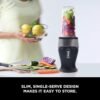
At 4.3 inches square and 13 inches tall this occupies almost no counter, and it is short enough to live under a wall cabinet. That combination, small footprint and daily convenience, is what makes a personal blender the machine that actually gets used in a small kitchen, a dorm room or an office.
Living with it day to day
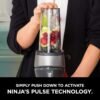
The workflow is the point. Load the cup, twist on the blade assembly, invert onto the base, press, then swap the blade for a spout lid and drink from the same cup. There is one vessel to wash and it is the one you drank from. That is a genuinely different daily experience from a jug blender, and it is why these machines get used every morning.
16 ounces is one drink. It is not a batch and it is not for a family, which is the honest limit. Anything requiring more than a single serving means running it twice.
700 watts is modest against the 1200 to 1800 watt figures quoted elsewhere in this catalog, and in a 16 ounce cup it does not need to be more. A small volume close to the blade is an easier job than a 72 ounce pitcher. What 700 watts will struggle with is a cup packed solid with frozen fruit and no liquid, which is the usual cause of a stalled personal blender.
Ninja publishes no decibel figure. Small blenders are less loud than large ones simply because there is less mass moving, though they are far from quiet and nothing here quantifies it.
Storage is where the format earns its place a second time. A jug blender lives on the counter permanently because assembling and disassembling it is enough friction to stop daily use. This one is small enough to go in a cupboard between uses and still get pulled out every morning, and at 13 inches tall it stands under a wall cabinet without moving. In a small kitchen, a studio or a shared office, that is often the difference between an appliance that is used and one that becomes a permanent obstruction on a work surface.
Controls and what works without an app
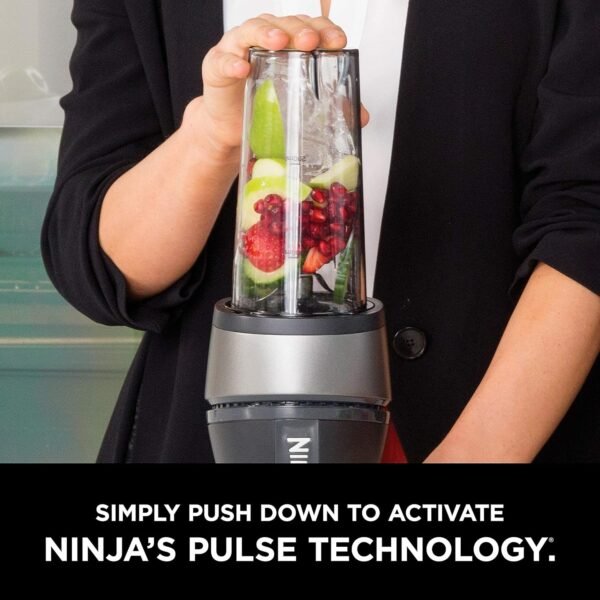
There is nothing to connect and nothing that should be. No app, no display, no account, no speeds to select. Pulse technology means the machine runs while pressed and stops when released, which is the entire interface.
That is about as simple and as durable as a kitchen appliance interface gets. There is no electronics module to fail, no board to lose settings and nothing that can be deprecated. On a machine used every morning for thirty seconds, a press to run switch is the correct answer, and the programmable and connected features found on machines such as the Vitamix A3300 are solving problems that do not exist at this size.
Running cost and upkeep
No consumables at all. Nothing on a schedule, no filters, no descaling. Electricity use is trivial.
The parts that wear are the blade assembly, the cup thread and gasket, and the drive coupling on the base. On a press to run machine used daily, the switch itself is a wear item too. Cups are the part most likely to need replacing, since they get carried, dropped and put through the dishwasher constantly, and replacement cups for this platform are widely available.
The blade assembly is sharp and it screws onto the cup, so it is handled every single use. That is the one safety habit this format demands, and it is more frequent handling of a blade than any jug blender requires.
Electrically, this listing publishes no voltage and no amperage. The 700 watt figure comes from the description rather than a rating field. At that level a personal blender is an undemanding appliance on any kitchen circuit, but the rating plate remains the only proper source.
Highlights
- Blend and drink from the same cup, so there is exactly one vessel to wash.
- A 4.3 inch square footprint that fits under a wall cabinet and in a dorm room.
- A press to run interface with no electronics that can fail or be deprecated.
- Dishwasher safe BPA free parts, which is what makes daily use practical.
- Replacement cups are widely available for this platform.
Things To Consider
- 16 ounces is one drink, so anything larger means running it repeatedly.
- Two spec fields are malformed and repeat their labels as values.
- 700 watts will stall on a cup packed with frozen fruit and no liquid.
- No voltage, amperage or noise figure is published anywhere.
- The sharp blade assembly is handled every single use, which no jug blender requires.
Who it is not for
Families and anyone blending for more than one person should buy a jug blender from the countertop blender category. Anyone making soup, nut butter or anything hot needs a completely different machine. Anyone loading a cup with solid frozen fruit will stall it regularly. And anyone comparing motor power across the personal size category should note that 700 watts is the lowest figure in the catalog, which is appropriate for the volume and still a real limit.