Description
What the JVM3160DFCC is and where it fits
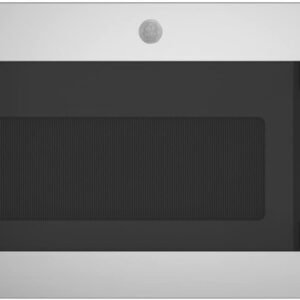
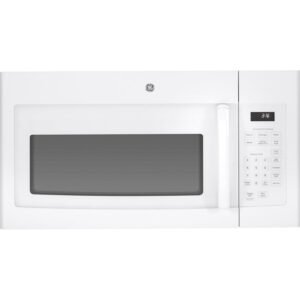
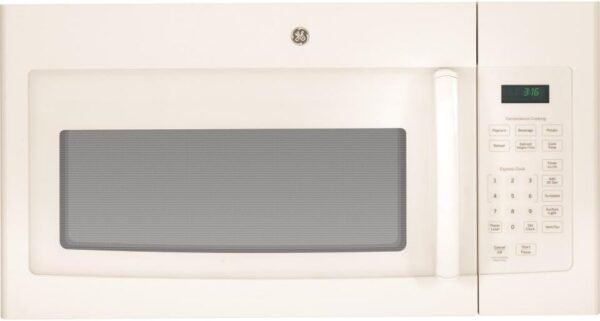
An over the range microwave does two jobs: it heats food and it replaces the range hood. That combination is why it is the standard fitting in American kitchens, and it is also the compromise at the heart of the format, because a microwave with a fan built into it will never ventilate as well as a purpose built hood. GE gives this one as 1.6 cubic feet with 1000 watts of cooking output, 29.875 inches wide, 16.5 high and 15.25 deep, in bisque, which is GE’s name for a beige finish rather than the stainless steel or white that most kitchens specify. GE calls its mounting system Easy Mount.
Living with it day to day
The venting figure is the number to weigh, and at 300 cubic feet per minute across two speeds it is modest. For comparison, dedicated hoods in this catalog are rated at 600 and 1000 cubic feet per minute. For a household that mostly boils and simmers, 300 is adequate. For anyone who sears steak, stir fries at high heat or renders bacon regularly, it will not keep up, and the smoke goes into the room. That is a real limitation of the format rather than a fault of this particular model, and it is the main reason kitchens that cook seriously fit a separate hood such as the FOTILE JQG7505 and put the microwave elsewhere.
On the cooking side, 1.6 cubic feet is a useful size that takes a dinner plate comfortably, and ten power levels give real control rather than the three or four settings cheap microwaves offer. GE lists convenience cooking controls for popcorn, beverage, potato and reheat, plus weight and time defrost, and the turntable can be switched off, which matters because a large rectangular dish will jam against the cavity walls if it is rotating. GE publishes no decibel rating for the fan, and fan noise is the daily complaint with over the range microwaves. The countertop alternative in this catalog is the Farberware 0.7 cubic foot model, and the stainless steel version of this same GE microwave is the GE JVM3160RFSS.
Controls and connected features
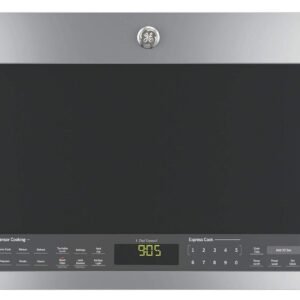
There is nothing connected here, and on a microwave that is unremarkable. Everything is on the keypad: power levels, the convenience cooking buttons, defrost by weight or time, and the turntable on and off control. There is no account, no firmware and nothing that can be discontinued, so the appliance behaves the same in fifteen years as it does now.
A membrane keypad is also more repairable than a glass touch panel, and on an appliance that gets pressed with greasy fingers several times a day that matters. What is absent is sensor cooking, which measures steam rather than running a fixed time and is the feature that stops reheated food drying at the edges. On this model, reheating is a timed operation and the user is the sensor. Buyers who want sensor cooking will find it on the microwave section of combination wall ovens such as the GE JK3800SHSS.
Running cost and upkeep
No electrical specification is published in this listing: no voltage, no amperage and no circuit requirement. Over the range microwaves in the North American market are ordinary plug in appliances, but they are commonly specified with a dedicated branch circuit because of the combined draw of the magnetron and the vent fan, and that requirement must come from GE’s installation manual rather than being assumed. The outlet also has to be positioned inside the cabinet above the microwave, which is part of the installation rather than an afterthought.
The venting arrangement is the other unanswered question. Over the range microwaves are normally installable in three ways: vented vertically through the cabinet and roof, vented horizontally through the back wall, or recirculating through a charcoal filter back into the room. This listing does not say which are supported, whether a charcoal filter is included, or what duct size is needed, and all three matter. A recirculating installation removes grease and some odor but returns heat and moisture to the kitchen, which is a significant difference in practice. Upkeep is the grease filter underneath, which is a metal mesh that goes in a dishwasher and should be cleaned monthly in a kitchen that cooks, plus the charcoal filter where fitted, which is a genuine consumable that has to be replaced rather than washed. The turntable is glass and goes in a dishwasher. No annual energy figure is published. The rest of the category sits under over the range microwave ovens.
Highlights
- Does two jobs at once, heating food and ventilating the cooktop, in one cabinet space.
- 1.6 cubic feet with 1000 watts of output, which takes a dinner plate comfortably.
- Ten power levels rather than the three or four cheap microwaves offer.
- The turntable can be switched off for large rectangular dishes.
- Convenience cooking buttons plus both weight and time defrost.
- A membrane keypad, which survives greasy fingers better than a glass panel.
Things To Consider
- A 300 cubic foot per minute fan is modest next to a dedicated hood.
- No electrical specification is published, and the outlet must sit in the cabinet above.
- The listing does not say whether vertical, horizontal or recirculating venting is supported.
- No charcoal filter is mentioned, and it is a consumable where recirculating.
- There is no sensor cooking, so reheating is a timed operation.
- Bisque is a beige finish that will not match a stainless or white kitchen.
Who it is not for
Anyone who cooks at high heat regularly should fit a proper hood and put the microwave somewhere else, because 300 cubic feet per minute will not clear a hot pan. Kitchens with no cabinet above the range cannot mount one at all. Shorter cooks should note that an over the range microwave sits high and reaching a hot dish down from above a live cooktop is genuinely awkward. And anyone matching an existing kitchen should check the finish carefully, since bisque is a beige that will look wrong beside stainless or white appliances.