Description
What the AM-50BAJ is and where it fits
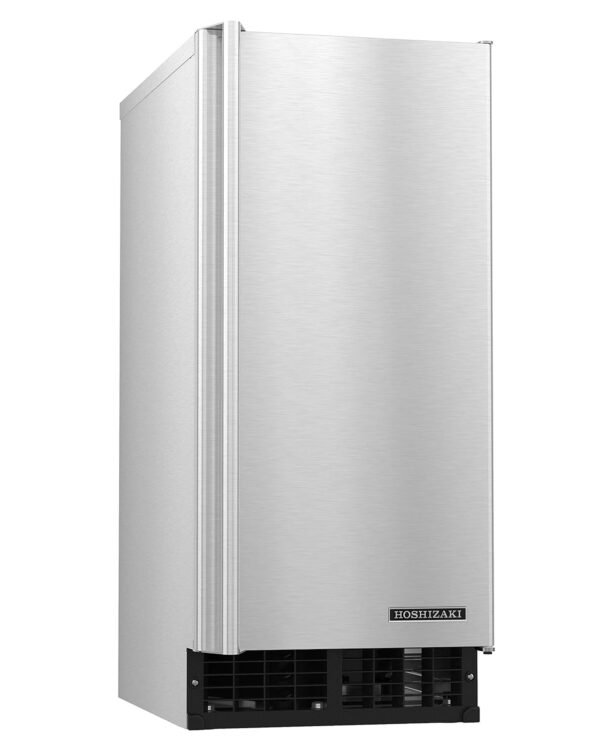
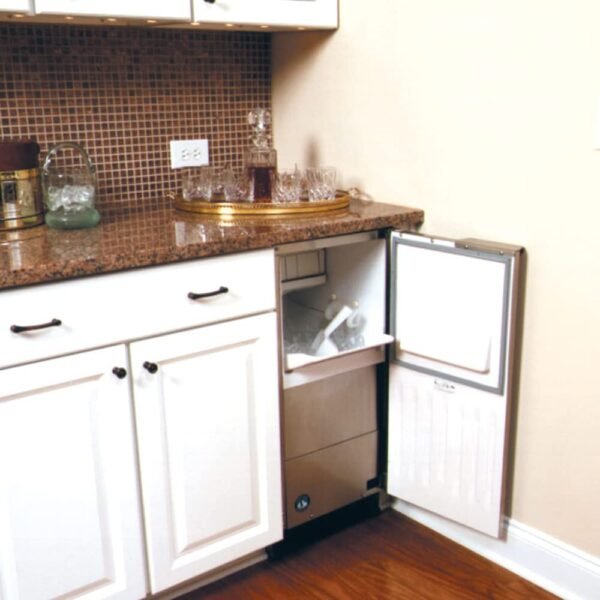
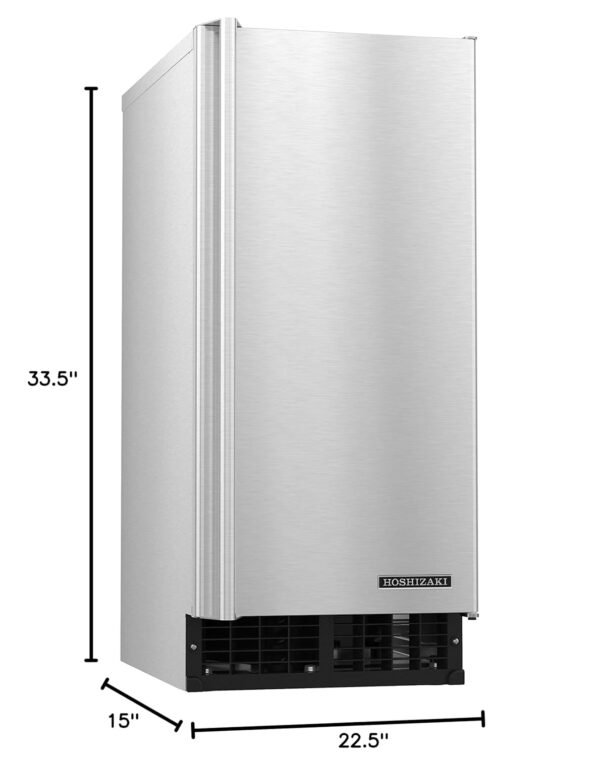
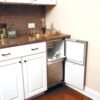
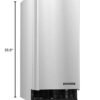
This is a different class of machine from anything on a countertop. The Hoshizaki AM-50BAJ is a 15 inch wide built in ice maker with an integrated storage bin, measuring 22.5 inches deep, 15 inches wide and 33.5 inches high, designed to slot into a run of base cabinets under a counter. Hoshizaki builds primarily for commercial kitchens and bars, and this unit carries NSF certification alongside UL listing, which is what a health inspector looks for. In a home it fits a wet bar, a butler’s pantry or an island, and it exists to solve the problem that neither a refrigerator ice maker nor a countertop machine solves: keeping a real quantity of ice available continuously without anyone tending it.
Living with it day to day
Hoshizaki publishes two production figures and the difference between them is the most useful thing in the listing. Up to 51 pounds per 24 hours applies at 70 degree ambient air and 50 degree incoming water. The AHRI certified figure, at 90 degree air and 70 degree water, is 35 pounds per 24 hours. Ice machines are heat pumps, and their output collapses as the room and the supply water warm up, so the honest planning number for a warm kitchen in summer is the lower one. The storage bin holds 22 pounds, and once it is full the machine stops until ice is drawn down, which is why a bin machine feels effortless in a way a countertop unit never does.
The cube style is Hoshizaki’s Top Hat, a full cube with a recess in one face. It is dense, slow melting and clear enough to look right in a glass, which is a different product from the hollow bullet ice countertop machines produce. Bin storage is not refrigerated on machines of this type, so ice does slowly melt in the bin and drain away, and the machine tops it back up. That is invisible in daily use but it is the reason the unit runs periodically even when nobody has taken ice. Hoshizaki publishes no decibel rating here, and a self contained air cooled condenser under a counter is not silent: the condenser fan runs whenever the machine is making ice, which in a warm room is a large part of the day.
Controls and connected features
There is nothing connected and there is very little to operate. A machine like this is essentially a thermostat and a bin level control: it runs when the bin has room and stops when it does not, and the owner’s involvement is limited to a power switch and a cleaning cycle. There is no app, no scheduling and no display of the sort a domestic appliance carries, which is normal for commercial equipment where reliability and serviceability matter more than an interface. The practical consequence is that everything about this machine will behave identically in fifteen years, and that a service technician can diagnose it without a phone. Compared with a countertop machine such as the Silonn SLIM01B, which needs a person to fill and empty it, the absence of an interface here is a feature rather than an omission.
Running cost and upkeep
The electrical specification is stated properly, which is rare in this catalog: 115 volts, 60 hertz, single phase, 3.8 amps. That is an ordinary North American supply and a modest current, though commercial equipment of this type is commonly placed on a dedicated circuit and the installation instructions should be followed on that point rather than assumed. One figure in the specification table is wrong and should not be repeated: the wattage field reads 17 kWh, which is a unit of energy rather than a rate of power and cannot describe a wattage. Take the 3.8 amp figure at 115 volts as the meaningful electrical number.
The listing does not state the water supply or drain requirements, and this is the single most important omission for a buyer. Every built in cube machine of this type needs a cold water supply and a gravity drain, and a bin machine also needs the bin drain routed somewhere. Air cooled means it also needs ventilation clearance at the front, because a self contained condenser rejects its heat into the room. None of that appears in the listing, so the installation manual is essential reading before anyone commits to a cabinet opening. Upkeep is the real ownership cost: commercial ice machines require periodic descaling of the evaporator and sanitizing of the bin, and manufacturers publish a cleaning interval that gets shorter in hard water. Unlike the disposable countertop machines in the ice makers category, this is equipment designed to be serviced, with parts available, which is what justifies the price over a decade. Buyers weighing this against a repair on an existing refrigerator should compare it with the cost of a part such as the Whirlpool W10882923 ice maker assembly.
Highlights
- Electrical requirement is published in full: 115 volts, 60 hertz, single phase, 3.8 amps.
- Two production figures are given, including the AHRI certified 35 pounds per 24 hours at 90 and 70 degrees.
- A 22 pound integrated storage bin means ice is available without anyone tending the machine.
- NSF certified and UL listed, which matters for any semi commercial setting.
- Top Hat full cubes are dense and slow melting, unlike hollow bullet ice.
- Built to be serviced rather than replaced, with a full length stainless steel handle and stainless finish.
Things To Consider
- The wattage field reads 17 kWh, which is an energy unit and cannot describe power draw.
- Neither the water supply nor the drain requirement is stated anywhere in the listing.
- Ventilation clearance for the air cooled condenser is not specified either.
- Output drops from 51 to 35 pounds per day as air and water temperature rise, so the higher figure is optimistic.
- The bin is not refrigerated, so stored ice melts and drains and the machine cycles to replace it.
- No decibel rating is published for a machine with a condenser fan running under a counter.
Who it is not for
This is not a plug in appliance and should not be bought as one. It needs plumbing, a drain, a cabinet opening and ventilation, and the listing describes none of those requirements, which makes it a project rather than a purchase. Anyone who wants ice occasionally, for a few parties a year, is spending a great deal of money on capacity that will sit idle, and a countertop machine such as the ZAFRO Z5815NH covers that need for a fraction of the outlay. Households that simply want ice in a glass at the door should buy a refrigerator with a dispenser, such as the Frigidaire GRSS2652AF, and skip this category entirely. And anyone unwilling to commit to a periodic descaling and sanitizing routine should not own commercial ice equipment at all.