
Description
What the ELFW4222AW is and where it fits
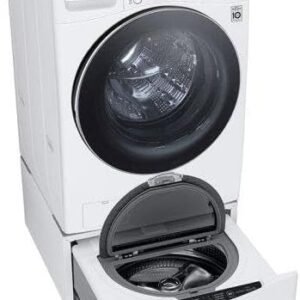
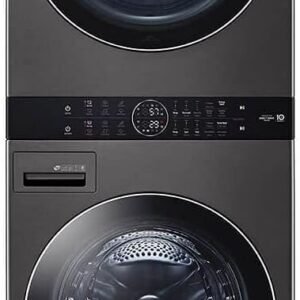
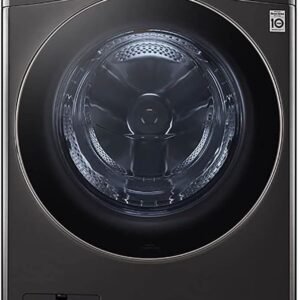
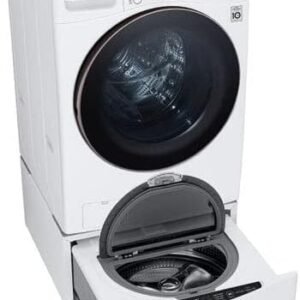
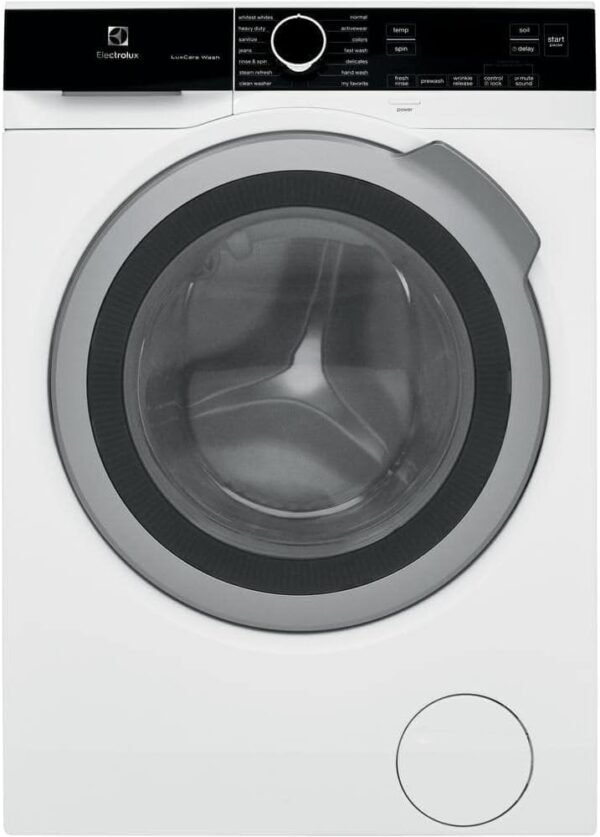
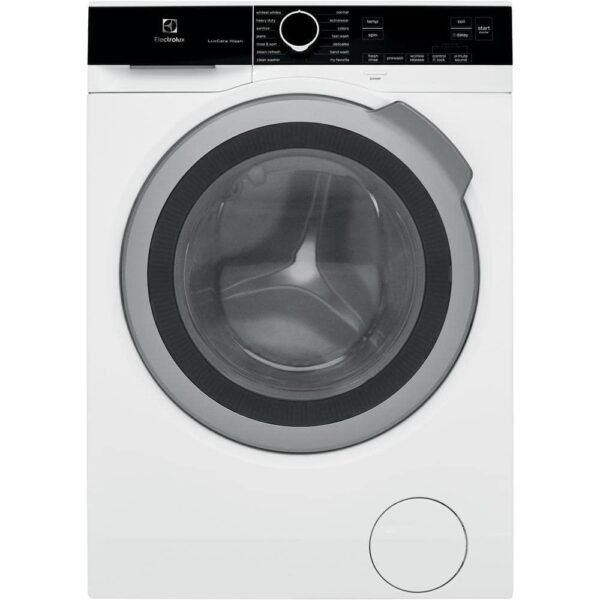
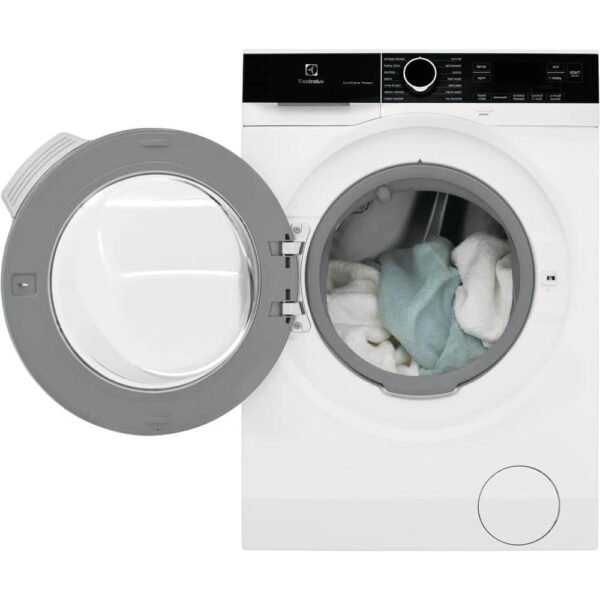
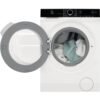
Compact European format laundry is a different market from the American 27 inch standard, and this is a good example of it: 24 inches wide, 2.4 cubic feet of drum, with a cabinet listed at 25 by 23.6 by 33.5 inches. That footprint fits under a counter, into a closet, or stacked with a matching compact dryer in a space no full size pair could occupy. What a buyer trades is capacity. Two and a half cubic feet is roughly half a mainstream front loader, so a household doing family laundry will run more loads. The audience is an apartment, a condominium, a second laundry point, or a home where the laundry has to hide inside kitchen cabinetry.
Living with it day to day
The spin speed is the number that changes daily life most, and at 1400 rpm this is faster than most American full size machines, which typically top out at 1200 or 1300. A faster final spin extracts more water, so laundry comes out of the drum drier and the subsequent drying stage is shorter, whether that means a dryer cycle or a drying rack. In a compact laundry setup where the dryer is also small and slow, that matters more than it would with a full size pair.
Electrolux describes the LuxCare wash system as improved wash actions, temperature control and bottom vent steam options, and Perfect Steam as gently lifting dirt and stains from fibers. Both are manufacturer descriptions rather than measured claims, and no test conditions accompany them. No cycle count, no cycle list and no decibel rating is published for this model, which are three real gaps: on a machine likely to live in an open plan apartment, noise is exactly what a buyer wants to know. The matching approach for drying in a space like this is a ventless machine such as the Bosch WTG86403UC condensation dryer, or a combination unit such as the LG WM3555HWA that does both jobs in one drum.
Controls and connected features
The console is push button and nothing in this listing describes WiFi, an app or any connected service. For a compact machine that will often be installed in a rental or a second home, that is a defensible specification: nothing needs an account, nothing needs pairing, and every function will work identically for the life of the appliance. A push button console also has a mechanical quality that a touchscreen does not, in that a failed display does not necessarily take the machine out of service.
The old marketing copy for this machine mentions a child safety lock, and that feature does not appear anywhere in the manufacturer data in this listing, so it should be confirmed from Electrolux’s own documentation rather than assumed. What is absent either way is a cycle end notification, remote start and remote diagnostics, which is the standard trade for a machine without connectivity.
Running cost and upkeep
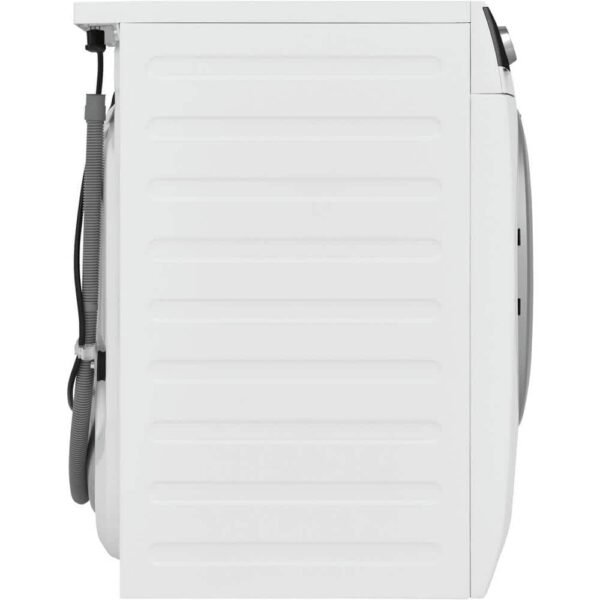
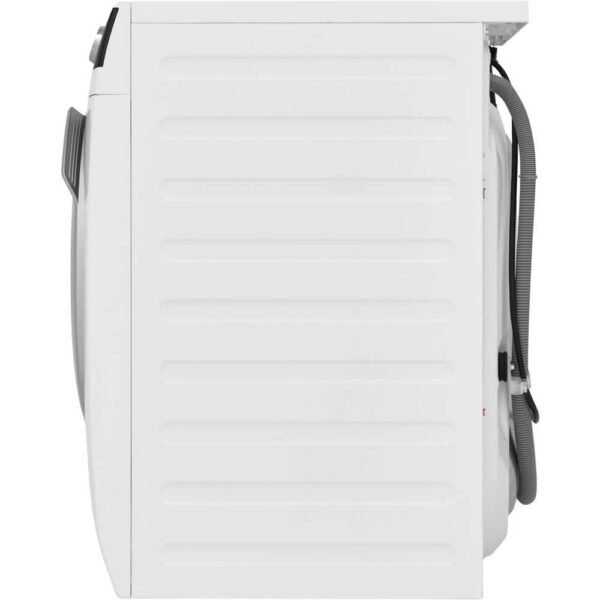
The voltage is published at 120 volts, which is genuinely useful and uncommon in this catalog, and it means this is an ordinary North American plug in appliance rather than one needing a dedicated circuit. No amperage is published, so the installation manual should still be consulted for the branch circuit. There is no gas connection and no venting requirement, because this is a washer with no drying function. Water supply pressure, hose specification and drain height are not published, and all three matter for a front load installation, particularly one going under a counter where the drain hose route may be constrained.
No annual energy or water consumption figure is published, and no IMEF or IWF appears, so running cost cannot be calculated. A compact washer uses less water per load than a full size one simply because the drum is smaller, though more loads offset some of that. The high spin speed also earns its keep on the running cost side, because every extra minute of water spun out of the laundry is a minute the dryer does not have to spend heating it away, and drying is the more expensive half of the process. Upkeep is the front loader routine and it matters more on a compact machine tucked under a counter where air does not circulate: run the tub clean cycle on schedule, leave the door ajar between washes, wipe the gasket dry, and rinse the dispenser. A machine built into cabinetry with the door closed will develop a smell faster than one standing in a laundry room. One small data oddity: the model number fields carry a stray hash character before the model number. Other compact and portable options sit across the washers section, from the COSTWAY automatic portable washer up to the full size LG WM3400CW.
Highlights
- Voltage is published at 120 volts, so no dedicated circuit is implied.
- Just 24 inches wide, which fits under counters and inside cabinetry.
- A 1400 rpm maximum spin, faster than most American full size machines.
- Steam is included on a compact machine, which is not universal at this size.
- Push button console with no app, account or firmware.
- Stackable format for a compact laundry column in a small home.
Things To Consider
- 2.4 cubic feet is roughly half a mainstream front loader, so more loads are needed.
- No cycle count and no cycle list is published anywhere in the listing.
- No decibel rating, which matters for a machine likely to sit in an open plan apartment.
- No amperage, water pressure or drain height requirement is stated.
- The child lock mentioned in older marketing copy does not appear in the manufacturer data.
- Built into cabinetry with the door closed, the gasket will develop odor faster.
Who it is not for
A family should not attempt to run its weekly laundry through 2.4 cubic feet, because the number of loads becomes the limiting factor. Anyone with a 27 inch laundry space available is giving up half the drum for nothing. Households that want a washer and dryer in one appliance need a combination unit, since this only washes. And anyone unwilling to air the gasket and run tub clean cycles should not buy a compact front loader in particular, because a small sealed drum in a cabinet is the worst case for that problem.