

Description
What this COSTWAY twin tub is and where it fits
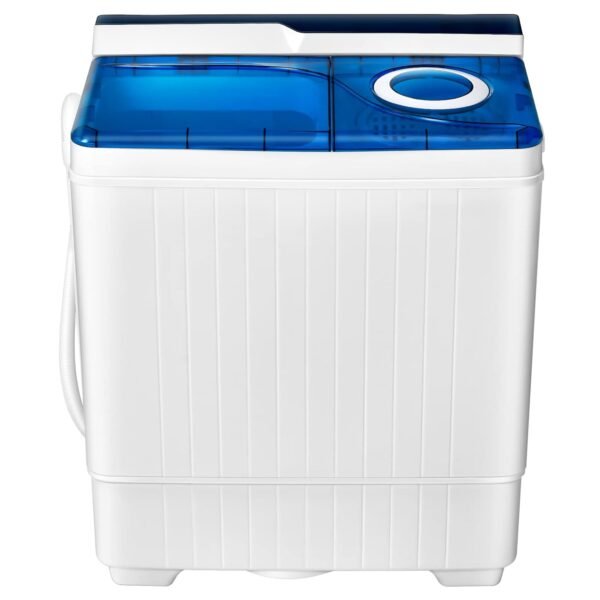
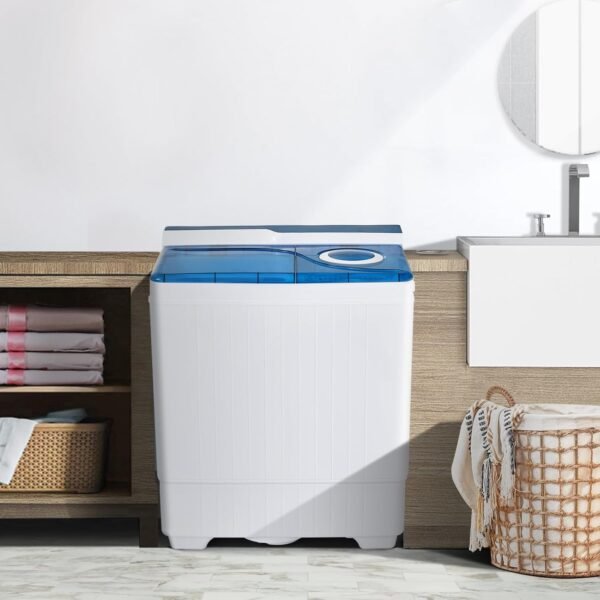
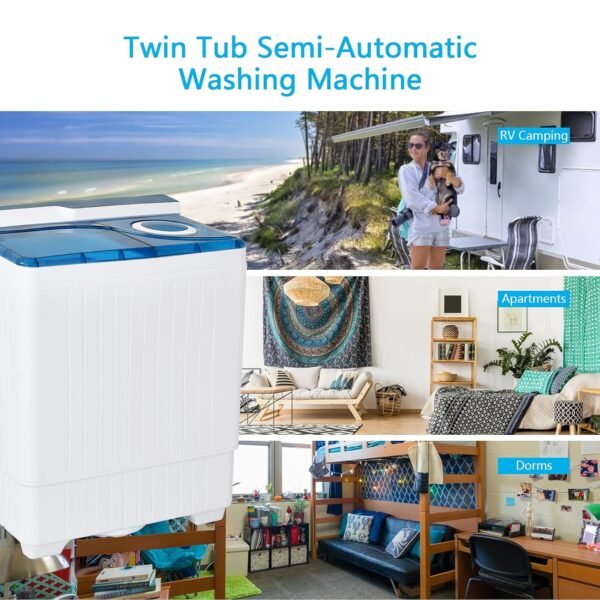
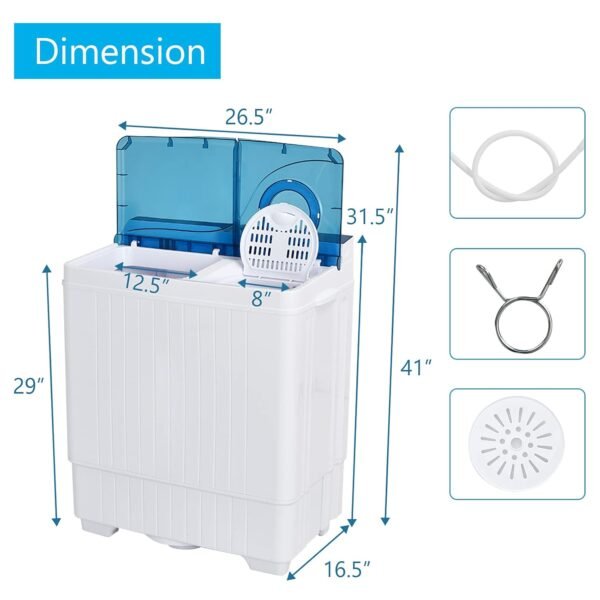
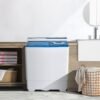
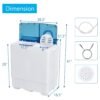
This is the pump equipped version of COSTWAY’s twin tub portable washer, finished in blue, measuring 16.5 inches deep, 26.5 inches wide and 31.5 inches high and weighing 34 pounds. The construction is ABS and polypropylene, which is what keeps it light enough for one person to move. Two tubs sit side by side: one agitates, one spins, and the laundry is moved between them by hand. COSTWAY aims it explicitly at apartments and recreational vehicles, and that is the right description of where a machine like this earns its place. Anywhere with a laundry hookup and floor space, a plumbed washer is a better appliance in every respect except portability.
Living with it day to day
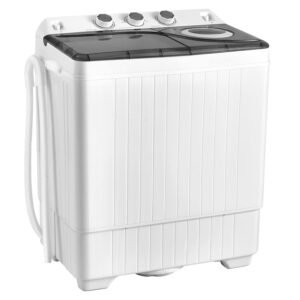
The single most important difference between this and the otherwise similar grey and white COSTWAY twin tub is the drain pump. A gravity drain machine has to be positioned above whatever it drains into, which in practice means a floor drain or a bath, and rules out a kitchen sink. A pump lets the waste hose be hooked over the edge of a sink, which is how most apartment users actually want to do this. That single component changes where the machine can live, and it is worth checking carefully which version is being ordered, because the two listings look nearly identical.
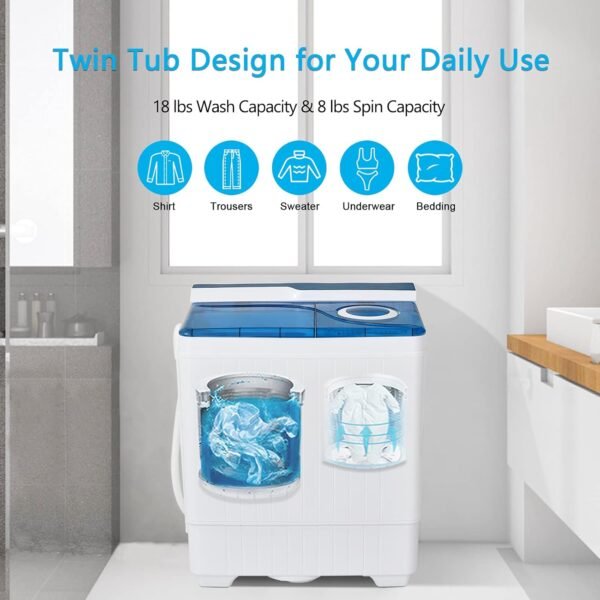
Capacity is quoted as 26 pounds, and the detail behind it is 18 pounds of wash tub and 8 pounds of spinner. Those figures should not be added together in the buyer’s head: the wash tub takes 18 pounds and that load then has to be spun in more than one batch. The four listed settings are normal, gentle, spin and drain, selected by knob with a mechanical timer, and there is no water heating, so wash temperature is whatever the tap delivers. The clear lid is a genuinely useful detail on a machine where the user is expected to be watching and intervening. COSTWAY publishes no decibel rating, and a plastic bodied spin tub at speed is audible throughout a small apartment.
Controls and connected features
Nothing here is connected and nothing is automatic. Two knobs run two mechanical timers, one per tub, and the user decides when each stage starts and stops. That is genuinely more robust than an electronic control board for an appliance that gets stored, moved and used in damp conditions, and it means there is no firmware, no app and nothing to configure. It also means there is no cycle in the sense that a plumbed machine has one: filling, washing, draining, rinsing and spinning are five separate decisions, and a proper rinse means refilling the wash tub with clean water and running it again. Anyone accustomed to a machine such as the LG WM4000HWA, where a cycle is selected once and finishes on its own, should understand how different the routine is before buying.
Running cost and upkeep
No electrical specification is published for this version. Neither voltage nor wattage appears in the specification data, which is a gap worth noting because the sibling model in the same range publishes 420 watts at 120 volts, and there is no reason to assume this one differs. Even so, the figure should be read off the machine’s rating plate or the manual rather than inferred. What can be said with confidence is that a twin tub washer has no water heater, so its electricity use is limited to two small motors and a pump, and that is a fraction of what a plumbed washer with a heater consumes.
There is no permanent plumbing. Filling is by hose or by hand and draining is through the pump and hose, so the ongoing cost is water and detergent rather than infrastructure. Maintenance amounts to drying out: plastic tubs left wet and closed will smell within days, so both tubs and the lid should be left open after use, and the machine drained fully before storage. There are no filters and no consumables. Failure points on a machine of this class are the timer knobs, the pump and the hose connections, and none of them are realistically serviceable, so the machine should be treated as a low cost appliance with a finite life rather than a long term investment. As with its sibling, the listing does not give a usable model number, which makes parts and warranty claims difficult and makes the three COSTWAY entries in the portable washers category hard to tell apart, even though one of them is a fully automatic single tub machine rather than a twin tub. For anyone with a laundry hookup, a compact plumbed machine such as the Amana NTW4519JW is a different proposition entirely.
Highlights
- A built in drain pump, so the machine does not need to sit above the drain point.
- No plumbing required, which makes it viable in apartments and recreational vehicles.
- Twin tubs run independently, so one load spins while the next washes.
- At 34 pounds it can be moved and stored by one person.
- Mechanical timer knobs rather than a control board, with nothing to configure or update.
- A clear lid allows the load to be watched, which matters on a machine that needs supervision.
Things To Consider
- No voltage or wattage is published for this version, unlike the near identical sibling model.
- The 26 pound figure combines an 18 pound wash tub with an 8 pound spinner.
- Every stage is manual, including transferring wet laundry between tubs and refilling to rinse.
- No water heating, so wash temperature is limited to what the tap supplies.
- The listing gives no real model number, which complicates parts and warranty claims.
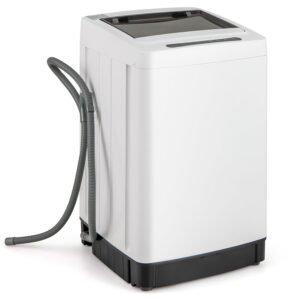
- Three COSTWAY portable washers appear in this catalog and only two of them are twin tubs.
Who it is not for
This is not a machine for a household of more than two people, because the spin tub turns every wash into several rounds. It is not for anyone who wants to start a load and walk away, since there is no automatic cycle. It is unsuitable where hot water washing is needed, as there is no heater. And it is the wrong purchase for anyone who already has a laundry hookup and the floor space to use it, because a plumbed machine will clean better, rinse better and take far less of the owner’s time. Anyone in that position should be looking at full size machines in the washers section instead.