Description
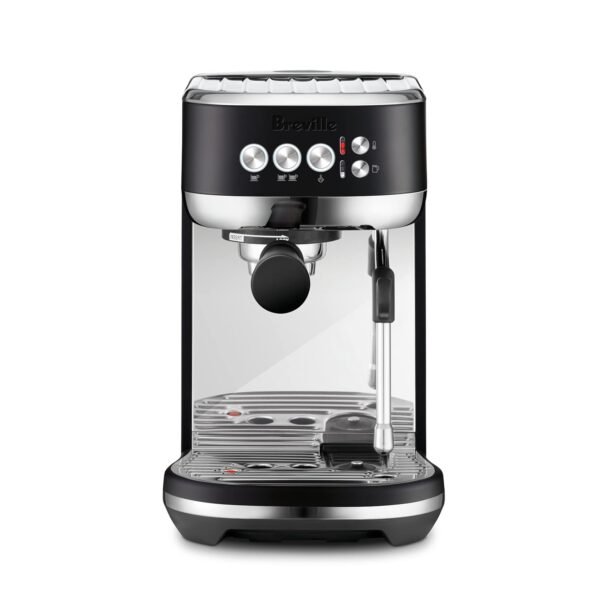
The Bambino Plus is Breville’s smallest espresso machine with an automatic milk system, and this is the Black Truffle version, model BES500BTR1BUS1. It is a pump espresso machine with a 54mm portafilter, PID temperature control and a wand that textures milk on its own. What it is not is a machine that grinds anything, and that omission is the most important thing to plan for.
What it is and where it fits
The listing gives the size as 14.25 inches deep by 7.5 inches wide by 12 inches high and the weight as 11 pounds. Seven and a half inches wide is genuinely narrow, and the depth is where the space actually goes, so a full depth counter is needed with room in front for a cup and a jug.
This site files it under coffee makers, which is a shelving decision rather than a description. Its sibling in Damson Blue, the BES500DBL, sits in the semi automatic espresso machines section instead. They are the same machine.
Where it fits is a kitchen that wants real espresso and milk drinks in the smallest reasonable footprint, and that already owns a grinder or intends to buy one. Espresso needs a grind that is adjustable to a fine degree, and no supermarket pre ground coffee is adjustable. That is a genuine additional purchase and it usually costs a meaningful fraction of the machine.
Living with it day to day
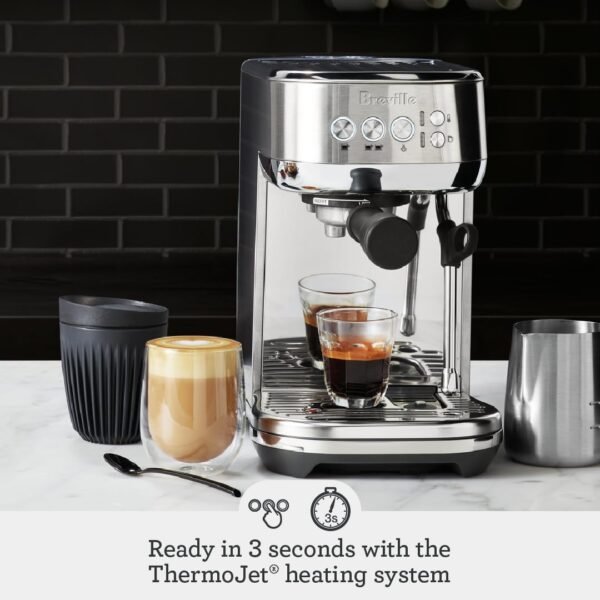
The daily routine is a real espresso routine: grind, dose into a basket, level, tamp, lock in the portafilter, pull a shot. Breville’s ThermoJet heating system is claimed in the product copy to reach temperature in three seconds, which is a manufacturer figure and is the single feature that makes a small espresso machine practical on a weekday. Machines that need several minutes to warm up get used at weekends only.
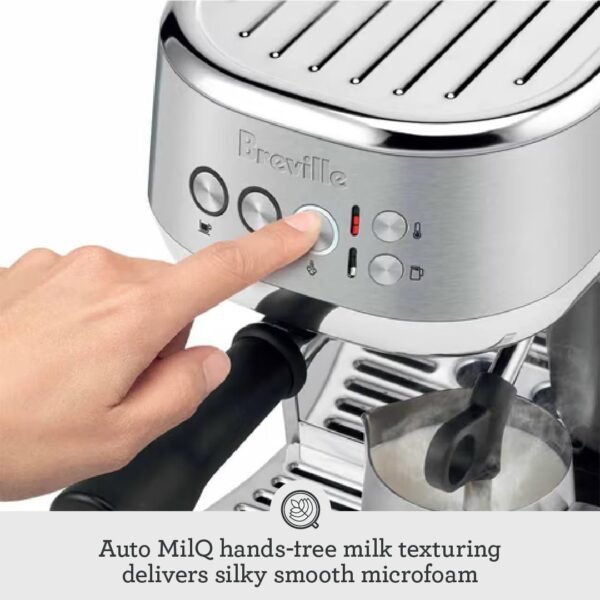
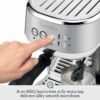
The automatic steam wand is what puts Plus in the name. It textures milk to a set temperature and froth level without the person doing anything, and unlike a tank fed system it works with fresh milk in a jug, so it can produce the microfoam that latte art needs. The cost is a chore that has to happen every single time: the wand is purged and wiped immediately after use, or the milk residue bakes on and hardens.
Cleanup otherwise is knocking a puck out of the basket, rinsing the portafilter and wiping the group. There is no carafe, no reservoir of brewed coffee and nothing that sits around. Noise is not published, and a vibration pump is briefly loud.
Controls and connected features
Buttons and PID temperature control held in the machine. There is no display, no app, no Wi Fi, no Bluetooth and no account, so nothing depends on a phone and no firmware change can alter how it behaves. Shot volume and milk settings are adjusted and stored on the machine itself.
The listing contradicts itself by giving the special feature as manual and the operation mode as fully automatic on the same page. Neither is accurate on its own: the coffee half is manual and the milk half is automatic, which is exactly the point of this model. A fully automatic machine in the usual sense grinds and doses on its own, which the Barista Touch does and this does not.
Running cost and upkeep
Voltage is recorded as 120 volts, correct for a North American machine, and this is a corded countertop appliance with no water line, no drain, no gas and no venting. Wattage and amperage are not published, so the rating plate is the reference, and an espresso machine with a fast heating system is not a light load on a shared kitchen circuit.
The running cost is coffee beans and nothing else, which over years is the cheapest possible way to drink espresso compared with the capsule machines in the single serve brewers range. Against that sits a maintenance list that a capsule machine does not have: the group seal is a wear part, the shower screen needs cleaning, backflushing keeps the group clear, and descaling is required on an interval set by local water hardness. None of those intervals are published on this listing.
The included components field on this record is almost empty, listing only a milk frother. The sibling listing for the same machine names a tamper, a dosing tool, a stainless milk jug, single and dual wall filter baskets, a cleaning tool and a cleaning disc. Those accessories matter, and anyone ordering from this listing should confirm what is actually in the box rather than assuming.
Highlights
- Automatic steam wand that textures fresh milk in a jug, which is what latte art requires.
- ThermoJet heating claimed at three seconds by the manufacturer, which makes daily use realistic.
- PID temperature control held in the machine with no app or account.
- 7.5 inches wide, so it fits a narrow run of counter.
- Runs on any coffee beans, with no proprietary pods or capsules.
- Correct 120V record on the listing.
Things To Consider
- There is no grinder. Espresso needs an adjustable grinder, which is a substantial separate purchase.
- The wand must be purged and wiped after every milk drink without exception.
- The included components field lists only a milk frother, while the sibling listing names seven accessories.
- The listing calls the machine both manual and fully automatic on the same page.
- 14.25 inches deep before allowing room for a cup and a jug.
- Group seals, shower screens, backflushing and descaling are all part of ownership.
Who it is not for
Anyone unwilling to buy a grinder should not buy this machine, because pre ground supermarket coffee will not produce a decent shot on a single wall basket. Anyone who wants coffee with one button should look at a capsule machine with a wand like the Creatista Plus, which removes the grinding and dosing entirely. Anyone who wants a mug of filter coffee is in the wrong section, since an espresso machine makes small concentrated drinks. And anyone who wants the grinder built in should look at the machines in the semi automatic espresso machines section and further up Breville’s own range, accepting the counter space that comes with it.