Description
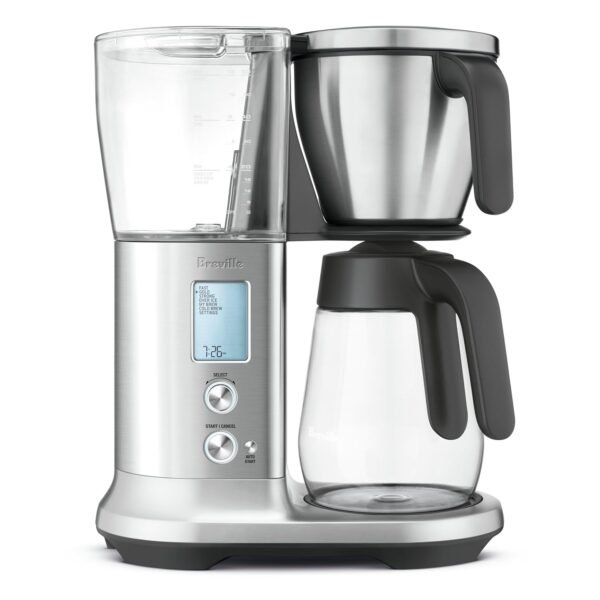
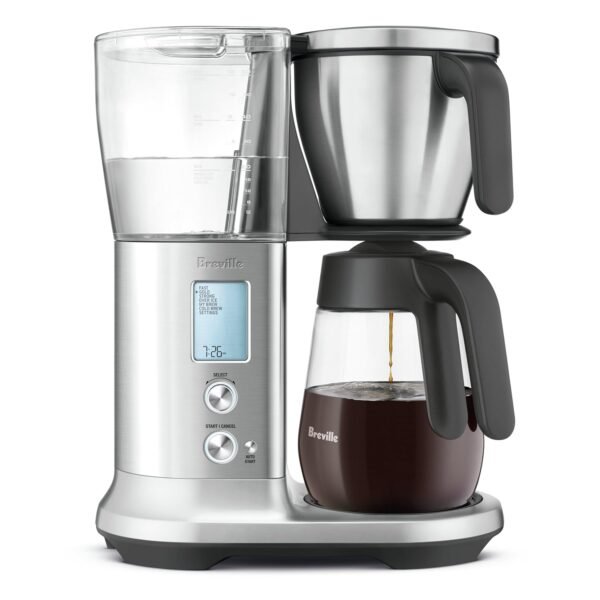
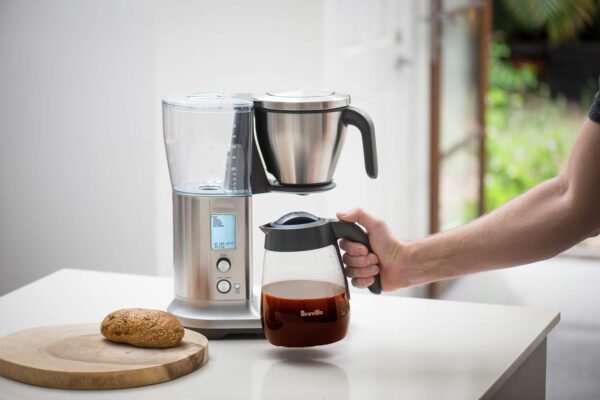
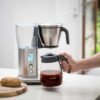
This is the glass carafe build of Breville’s Precision Brewer. Mechanically it is the same machine as the thermal carafe BDC450BSS, with the same PID temperature control, the same brew mode list and the same basket hardware. What changes is what the coffee sits in after brewing, and on a drip machine that is not a cosmetic difference.
What it is and where it fits
The listing gives the size as 6.7 inches deep by 12.4 inches wide by 15.7 inches high and the weight as 9.5 pounds, which reads correctly here and is the same footprint the thermal version records with its numbers transposed. Nearly 16 inches of height with a lid that opens upward means the wall cabinet gap is the first thing to measure. Breville’s own copy describes a 60 ounce brewing capacity, which is a manufacturer figure rather than a documented entry in this listing’s specification block.
This belongs in a kitchen that brews a full pot and drinks it reasonably quickly, or one that mostly brews small volumes into a cup. The Steep and Release valve exists so a partial batch holds water in the basket properly with no carafe underneath, which makes single mug brewing a designed use rather than a compromise.
Living with it day to day
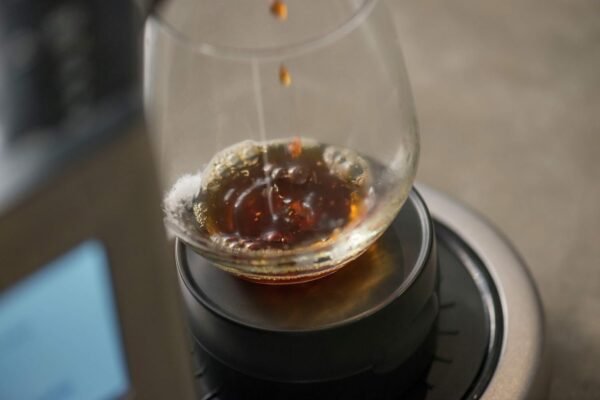
The glass carafe is the daily difference. It sits on a warming plate, and a warming plate keeps applying heat after brewing ends, which slowly cooks the coffee and flattens it. Anyone who has poured a bitter cup from the bottom of a pot at nine in the morning has met that mechanism. The upside is real too: glass is transparent, so the level is visible without lifting anything, glass is easy to clean thoroughly, and replacement carafes are cheap and widely stocked. Households that empty the pot inside half an hour lose almost nothing by choosing glass, and save money doing it.
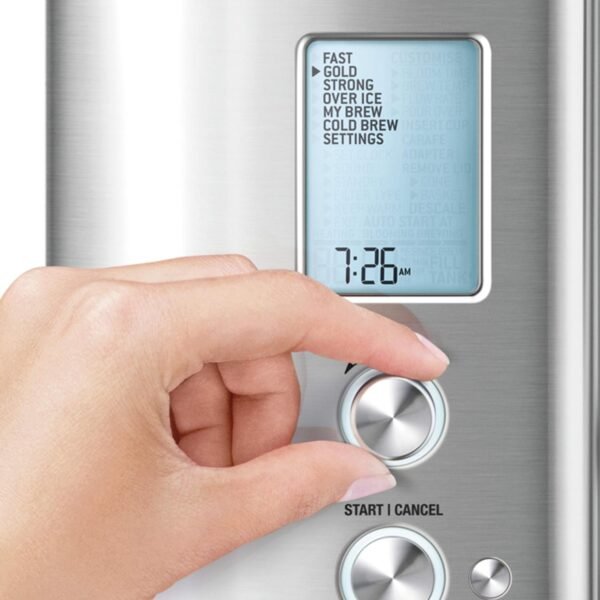
The mode list in the product copy is Gold, Fast, Strong, Iced, Cold Brew and My Brew. Iced brews concentrated over ice rather than chilling afterward. Cold Brew is measured in hours and is a planning exercise, not a morning option, and a household that mainly wants cold brew is better served by a dedicated steeper like the KitchenAid cold brew maker. Noise is not published; with no grinder, the boiler and pump are the whole sound.
The box is generous: a glass carafe, a cleaning brush, a coffee spoon, a mesh basket filter, a cone filter basket insert, a flat bottom basket with ten paper filters and a water hardness test strip. The cleaning brush is a small tell that this machine has parts worth cleaning properly.
Controls and connected features
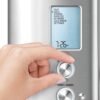
Buttons and a display, with programmable modes. The My Brew mode is where this machine earns its name, exposing bloom time, brew temperature and flow rate as settings rather than fixed behavior. Those are the three variables a person brewing by hand controls, and having them adjustable on an automatic machine is unusual outside of much more expensive equipment.
There is no app, no Wi Fi, no Bluetooth and no account. Every mode and every custom profile lives in the machine, so nothing here can be lost to a service shutdown or a phone upgrade. The one external compatibility is physical: the brew head is designed to sit above third party pour over drippers, so a V60 cone or a flat bottom dripper can be used with the machine handling the water. That is a genuinely useful bridge between manual and automatic brewing and it is the reason this model turns up in kitchens that already own a kettle and a scale.
Running cost and upkeep
The voltage field on this listing reads 110120 Volts, which is not a voltage. It is two numbers run together, almost certainly 110 and 120, which are the legacy and current ways of writing the same North American nominal supply. Treat it as a data fault and read the rating plate rather than the listing. What is not in doubt is that this is a plug in countertop appliance with no water line, no drain, no gas and no venting. Wattage and amperage are not published.
Paper filters are optional because a mesh basket is included, though the cone insert is designed around paper. The real recurring task is descaling, which is why a water hardness test strip ships in the box: the machine can be told how hard the local water is so it prompts at a sensible interval. In a hard water area that is a regular chore and a regular cost. The glass carafe is the part most likely to be replaced over the life of the machine, and it is the cheapest carafe to replace of any machine in this catalog.
Several fields on this listing are unreliable and should not be repeated as fact. The special feature field says Electric Stovetop Compatible, which is meaningless for a countertop drip machine and describes a stovetop kettle or moka pot. The specific uses field says Cold Brew, which is one of six modes rather than the purpose of the machine. The operation mode field says manual on a programmable brewer. The UPC field contains six different numbers. First availability is given as October 1, 2013.
Highlights
- Adjustable bloom time, brew temperature and flow rate in the custom mode, which is rare on a drip machine.
- Six brew modes covering hot, fast, strong, iced and cold brew.
- Brew head designed to sit over third party pour over drippers, bridging manual and automatic brewing.
- Steep and Release valve so small volumes brew correctly with no carafe underneath.
- Glass carafe is transparent, easy to clean and cheap to replace.
- Comprehensive accessory set including a cleaning brush and a water hardness test strip.
Things To Consider
- The voltage field records 110120 Volts, which is two numbers merged and not a real specification.
- A warming plate keeps heating the pot after brewing, which degrades the last cups.
- The special feature field claims electric stovetop compatibility, which does not apply to this machine at all.
- Operation mode is recorded as manual on a machine with six programmable modes.
- Nearly 16 inches high with an upward opening lid, so cabinet clearance matters.
- The 60 ounce capacity comes from Breville’s copy, not from this listing’s specifications.
Who it is not for
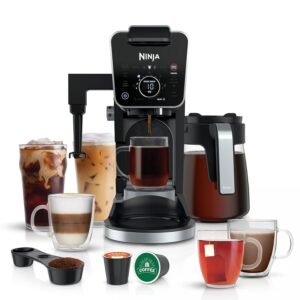
Anyone who wants coffee to still taste right two hours later should buy the thermal version instead, because a warming plate will undo the precision this machine spent its whole design budget on. Anyone who wants a single switch and no menu is buying the wrong machine entirely and would be happier with something from the plainer end of the coffee machines category. It is also not an espresso machine: there is no pump group and no steam wand, and anyone who wants those should look at the semi automatic espresso machines instead. For a household that mainly wants pods with an occasional pot, the Ninja CFP301 DualBrew Pro covers both formats in one body.