



Description
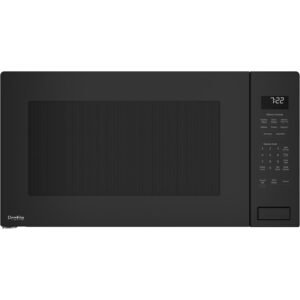
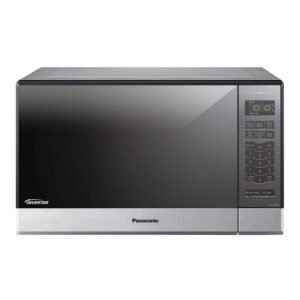
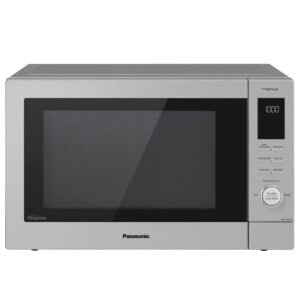
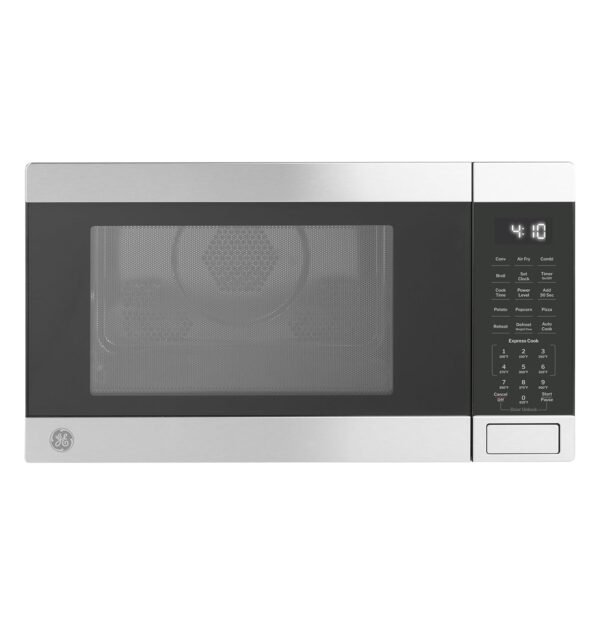
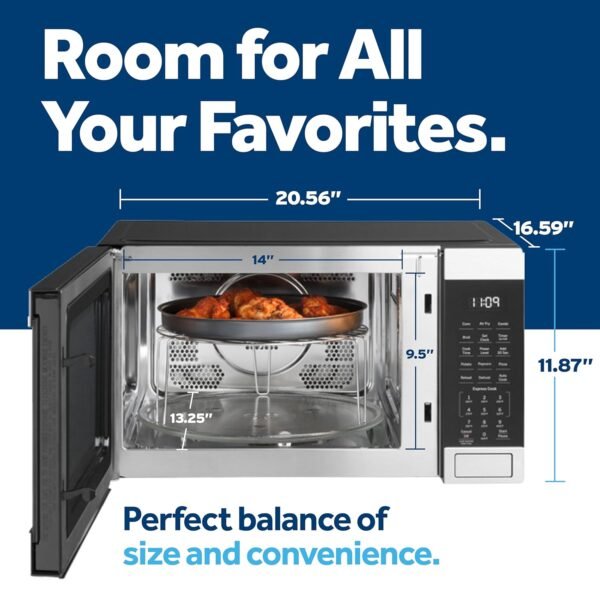
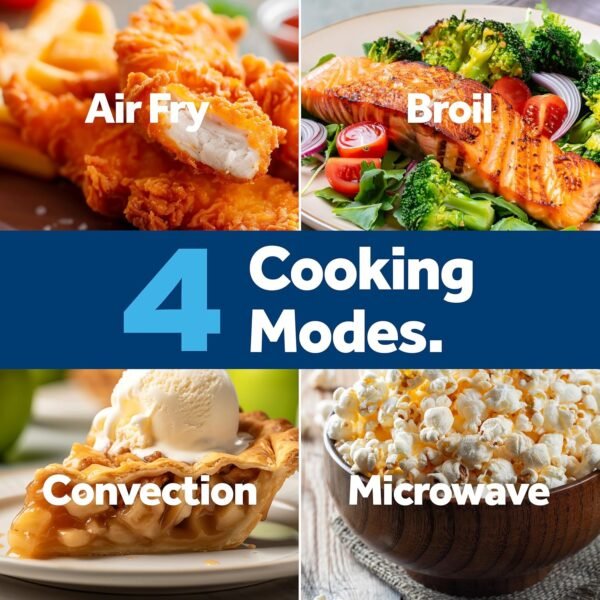
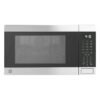
The GE GCST10A1WSS is a countertop microwave that is really three appliances sharing one cavity. GE records 1 cubic foot, 1050 watts, 120 volts, a listed weight of 35 pounds, dimensions of 16.6 by 20.6 by 11.88 inches, a China country of origin and an April 2024 launch. The described features are an air fry mode, a convection mode with its own rack, preset controls for foods such as fries and nuggets, and a two step child lock.
What it is and where it fits in a home
This is the answer for a kitchen with one spare stretch of counter and no room for both a microwave and an air fryer. The cavity is small at 1 cubic foot, which is the cost of the multi function design: adding a convection fan and a heating element eats internal volume, so a machine this size gives up capacity compared with a microwave only unit such as the Toshiba EM131A5C-BS at 1.2 cubic feet, or the Sharp SMC2266KS at 2.2.
Its natural home is a small kitchen, a studio apartment, a dorm allowed hot appliances, or a second cooking station in a basement or office. GE does not describe a trim kit, so this is a countertop appliance only and it should be treated as one.
Living with it day to day
The daily experience of a combination microwave is different from a plain one in two ways that matter. The first is heat. Convection and air fry modes run the cavity hot, which means the exterior gets hot, the unit needs real clearance on all sides, and the cooling fan continues after a cycle ends. The second is cleaning. Anything cooked with hot air splatters and browns onto the cavity walls in a way that microwave only cooking never does, so this appliance needs cleaning more often and more thoroughly than a reheating microwave.
Capacity in everyday terms: 1 cubic foot with a convection rack in place takes a single layer of fries, a few pieces of chicken, or one dinner plate on the turntable when used as a microwave. It is a one or two person cooking cavity. A family batch of fries is two rounds, not one.
At 1050 watts of microwave output it is slightly above the common 1000 watt rating, so packaged food timings translate directly. GE does not publish a decibel figure, and combination units have a convection fan that runs in addition to the magnetron cooling fan, so this will not be the quietest appliance on the counter. GE also does not publish the convection temperature range or the air fry temperature, which are the two numbers a cook actually wants, so those are gaps rather than something to state.
Controls and what still works without an app
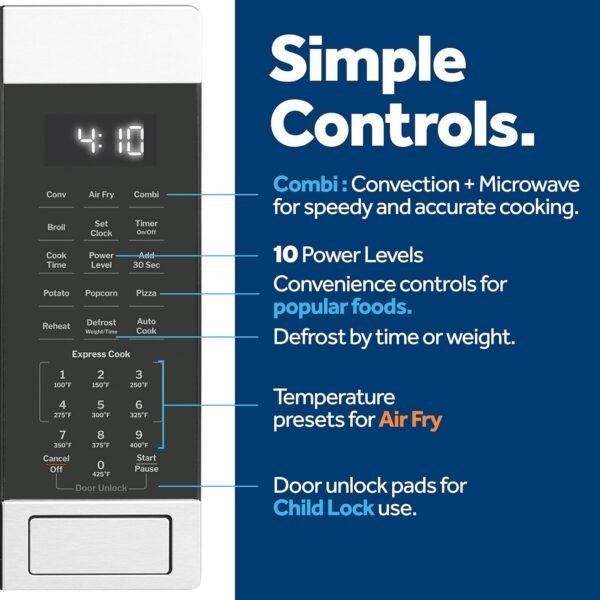
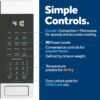
Nothing here is connected. No Wi-Fi, no app, no voice, no scan to cook. Everything runs from the front panel, which carries the mode selection, the preset programs for common air fried foods, the power levels and the two step child lock. On an appliance with three cooking methods, the presets do more work than usual, because they remove the need to know what temperature and time an air fry mode wants for nuggets.
The two step child lock is worth calling out on this model specifically. A microwave that also runs a hot convection cycle is a genuinely different safety proposition from one that only heats food internally, and a lock that takes two deliberate actions is the right design in a house with children.
Running cost and upkeep
There are no filters and no consumables in the subscription sense. The realistic upkeep is cleaning, and it is more work than a microwave only unit: the convection rack, the turntable, and the cavity walls all take browned residue from air frying. GE does not state whether the rack is dishwasher safe on this listing, so that is worth confirming from the manual.
Wear items over a long life are the turntable and roller ring, the door switches, the interior lamp, the convection fan motor and the heating element. The element and fan are additional failure points that a plain microwave does not have, which is the durability tradeoff of the format.
Electrically, GE publishes 120 volts and 1050 watts. It does not publish the input wattage in convection or air fry mode, which on a combination unit is the higher figure and the one that matters for circuit loading, and it does not publish the amperage or a dedicated circuit requirement. Do not assume. Confirm from the rating plate, and be aware that running this alongside a kettle or toaster on the same kitchen circuit is more likely to trip a breaker than a plain microwave would be.
Highlights
- Three cooking methods in one footprint, which is the point of the machine.
- Voltage and wattage both published, which many listings in this category omit.
- Preset programs remove the guesswork from air fry times and temperatures.
- Two step child lock, appropriate on a unit that runs a genuinely hot cycle.
- A convection rack is included rather than sold separately.
Things To Consider
- 1 cubic foot is small, and the convection rack reduces usable space further.
- No convection or air fry temperature range is published, which are the numbers a cook needs.
- Input wattage in convection mode, amperage and circuit requirement are all unstated.
- Air frying makes the cavity dirty in a way microwave only cooking does not.
- The convection fan and heating element are extra components that can fail.
Who it is not for
A household that reheats large family dishes should not buy a 1 cubic foot cavity, and the larger Panasonic NN-CD87KS or a unit from the countertop category is the better fit. Anyone who already owns a good air fryer or a real oven gains little here and gives up capacity. Anyone wanting connected features should look at the over the range models, where app control exists. And anyone with a tight electrical situation in an older kitchen should treat the missing input wattage figure as a reason to check the circuit before buying rather than after.