


Description
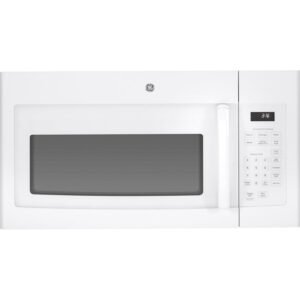
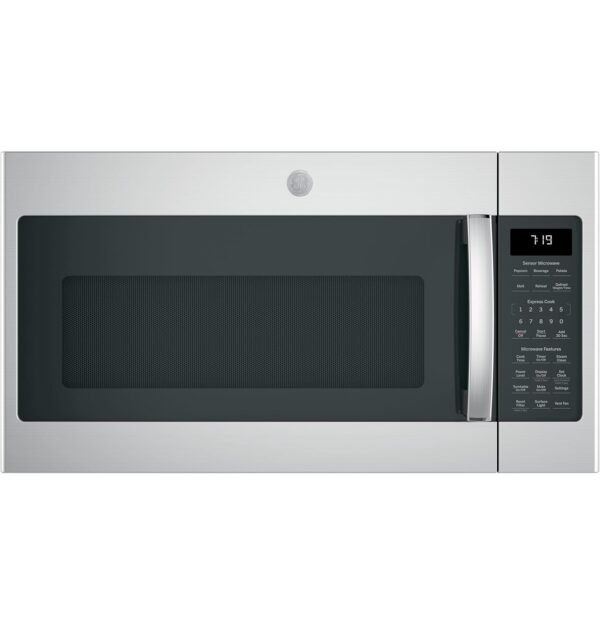
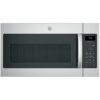
The GE JVM7195SKSS sits a clear step above GE’s entry over the range models. GE records 1.9 cubic feet, 1000 watts, 120 volts, a listed weight of 57 pounds and dimensions of 15 by 29.75 by 16.5 inches, with a first availability date of July 2016. The listing description adds sensor cooking controls, a four speed 400 CFM venting fan, an upfront charcoal filter with an indicator light, and both weight and time defrost. Those four items are the reason to choose this over the cheaper platform.
What it is and where it fits in a home
This is a hood replacement first and a microwave second, which is how any over the range unit should be judged. At 1.9 cubic feet the cavity is among the larger ones in the format, and it fits a standard 30 inch range opening. Compared with the GE JVM3160RFSS at 300 CFM on two speeds, the four speed 400 CFM fan here is a meaningful upgrade: more airflow, and more useful intermediate settings so the fan is not a choice between barely on and shouting.
GE publishes 120 volts but does not publish the amperage, the breaker size, the duct diameter or whether the unit ships set up for outside venting or recirculation. Those four unknowns decide the installation, and none of them should be assumed. The installation manual is the source, and on a hood replacement the existing duct run in the wall or ceiling is the constraint that usually settles it.
Living with it day to day
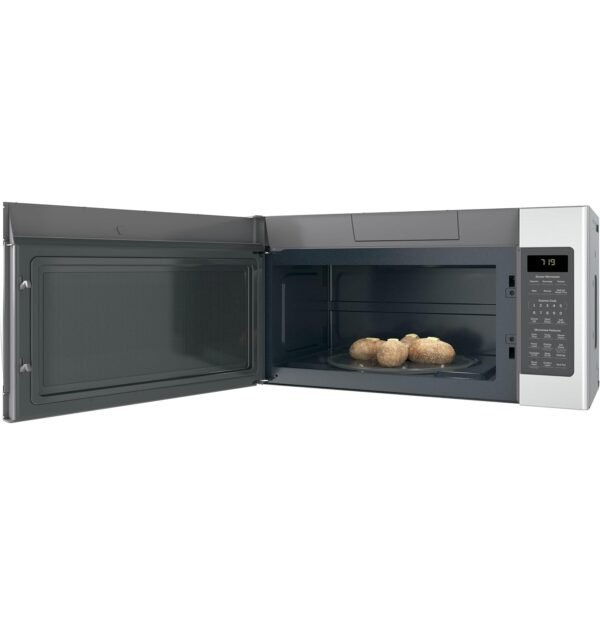
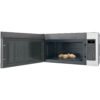
A 1.9 cubic foot cavity takes a 9 by 13 baking dish, a large dinner plate with clearance, and a tall pitcher without touching the roof. In a household that reheats big portions, that is the difference between one trip and two. Against that, everything in an over the range unit lives above the cooktop, so a full casserole comes down at shoulder height over hot burners, which is a real limit for shorter cooks and one this catalog’s drawer models such as the Sharp SMD2470AS avoid entirely.
Sensor cooking is the feature that changes the daily rhythm. Instead of guessing at three minutes, the sensor reads humidity in the cavity and ends the cycle on that reading. It works on foods with moisture to give off and it does nothing useful for a dry pastry, so it complements manual power levels rather than replacing them. Weight defrost is the other genuinely useful entry: enter the weight of the meat and GE runs the power schedule.
On noise, GE publishes no sone or decibel figure for either the fan or the magnetron, so the 400 CFM number cannot be translated into how loud it will be. What can be said is that four speeds is more useful than two, because the low setting can run through a long simmer without dominating the room.
Controls and what still works without an app
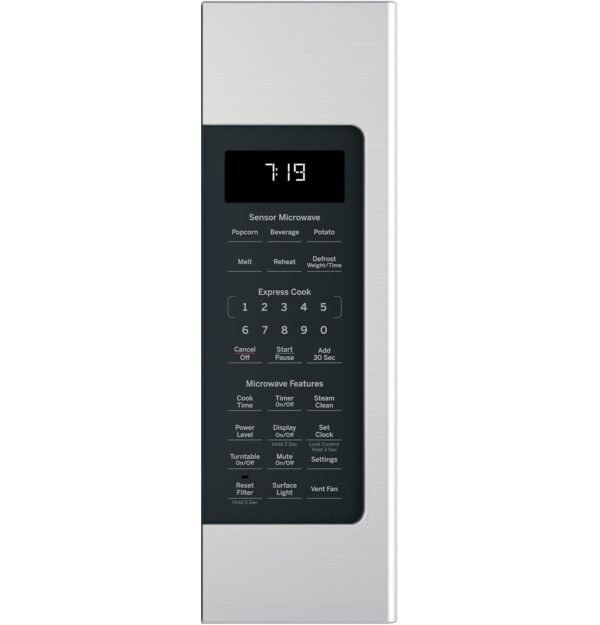
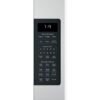
Nothing on this model needs a phone. There is no Wi-Fi radio published, no app pairing, no scan to cook and no remote start. The panel carries the sensor menus, ten power levels, the defrost entries, an add thirty seconds button and the vent and light switches, and all of that works with the power on and nothing else. If connected features matter, the comparison inside this catalog is the LG MVEL2125F, where the vent and light sync with a matching range and cooking can be started from an app.
The one control feature worth calling out is the charcoal filter indicator light on the front. It is not glamorous, but a filter reminder on the panel is the difference between a filter changed on schedule and one that has been saturated for two years.
Running cost and upkeep
Over the range microwaves have real consumables and this is where owners underestimate them. The metal grease filters below pull out and wash, and in a house that fries or sears they want doing monthly rather than yearly. If the unit is recirculating rather than ducted outside, the charcoal filter is a replaceable part, and the indicator light on this model tells you when. GE does not publish the filter part number, the replacement interval or a cost on this listing, so treat it as an unknown recurring item and confirm the part number at purchase.
The cooktop lamp is the other consumable, and the fan motor, door switches and turntable roller ring are the long term wear items. At 57 pounds this is not a unit that comes down casually for service, which is worth factoring into how much you want to do yourself.
Electrically, GE publishes 120 volts and a 1000 watt rating and nothing more. No amperage, no breaker recommendation, no Energy Star claim and no annual kilowatt hour figure. There is therefore nothing to support an energy saving claim in either direction, and the rating plate plus the installation manual are the only trustworthy sources for the circuit.
Highlights
- Four speed 400 CFM venting, which is a genuine step above the 300 CFM entry class.
- A charcoal filter change indicator on the panel, so maintenance is prompted rather than forgotten.
- 1.9 cubic feet takes a 9 by 13 dish, which many over the range cavities will not.
- Sensor cooking plus weight defrost, both operating locally with no app involved.
- Voltage and wattage are both published on the listing.
Things To Consider
- Amperage, breaker size, duct diameter and vent configuration are all absent from the listing.
- 57 pounds means at least two people and a support brace to install or remove.
- No noise figure is published for the fan, so 400 CFM cannot be translated into loudness.
- Charcoal filter part number, interval and cost are not stated, so the running cost is unknown at purchase.
- No connected features, which is a plus for some buyers and a gap for others.
Who it is not for
Anyone in a rental cannot install this without permission, and the countertop microwave ovens is the practical route there. Households with a serious high output cooktop should still be comparing this against a dedicated hood, because even 400 CFM through a microwave body is a compromise against a purpose built insert. Shorter cooks and anyone with shoulder trouble should look hard at whether a 1.9 cubic foot cavity above a range is a good idea, since capacity and reach pull in opposite directions in this format. And buyers who want app control or a scan to cook feature will need to look elsewhere in the over the range category.