Description
What the JK3800SHSS is and where it fits
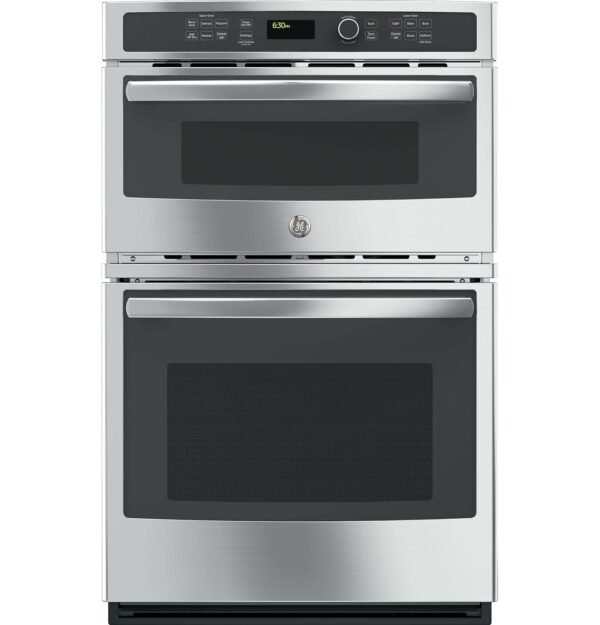
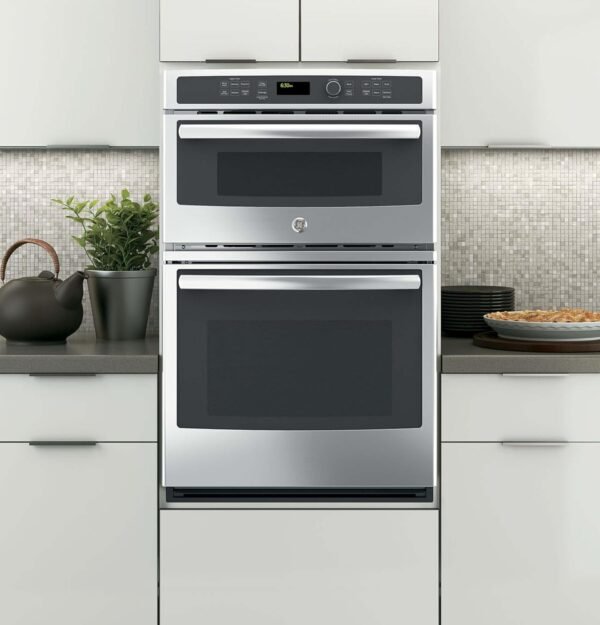
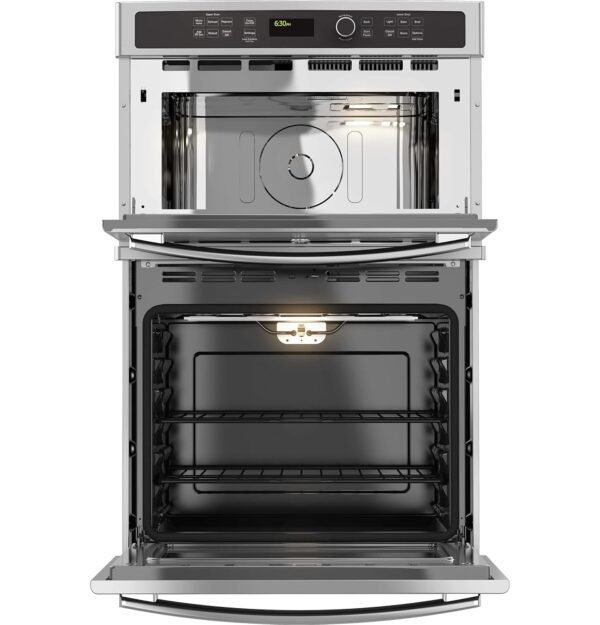
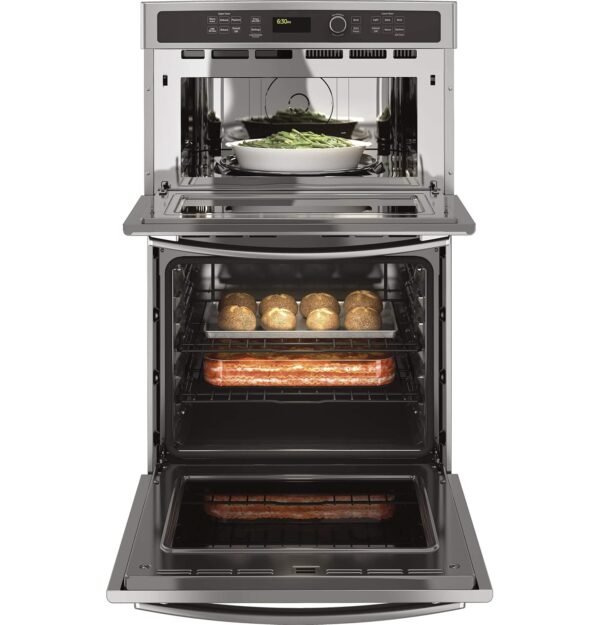
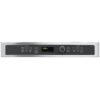
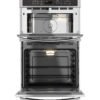
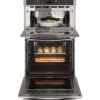
A combination wall oven stacks a microwave over a full size oven in one built in column, which suits a kitchen where a countertop microwave has nowhere to go and a second full oven would be excess. GE’s version weighs 172 pounds and is listed at 26.87 by 26.75 by 42.37 inches, in stainless steel, with the microwave rated at 1000 watts. It is a built in appliance, so it goes into a cabinet cutout and the supply has to be run before the cabinetry closes, which makes it a kitchen project rather than a purchase.
Living with it day to day
The lower oven is where the useful detail sits. GE specifies three self clean heavy duty oven racks that can be configured in six positions. Heavy duty racks matter because a full turkey or a heavy roasting pan will bow a light rack, and self clean racks matter because racks that cannot survive the cleaning cycle have to be taken out and scrubbed by hand every time, which is the small indignity that puts people off using self cleaning at all. Six rack positions is a generous count and gives real flexibility for tall items and for two level baking.
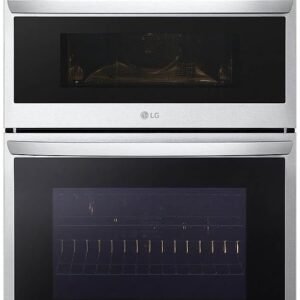
A warming, storage and broiler drawer arrangement is listed, along with auto defrost on the microwave. GE publishes no oven capacity for the lower cavity anywhere in this listing, which is a notable gap: the capacity field records 1.7 cubic feet, and that is the microwave, not the oven. Anyone comparing this against a rival needs the lower oven volume from GE’s specification sheet. No preheat times and no decibel rating are published either. The alternative in this format is the LG WCEP6423F, which publishes both capacities and its cutout dimensions.
Controls and connected features
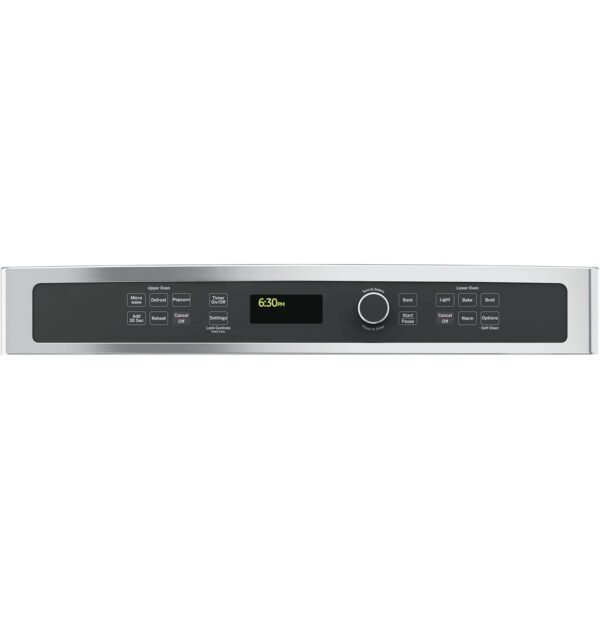
The control arrangement here is better than the specification makes it sound: glass touch electronic controls combined with a physical dial for setting and adjusting. That combination is the right one on an appliance that will be in a wall for two decades, because a dial gives a mechanical way to change a temperature quickly and gives the appliance a fallback if a touch surface stops responding. Ovens with no physical control at all are out of service entirely when the glass panel fails.
Nothing in this listing describes WiFi, an app or any connected service, so there is no account, no firmware and no platform that can be discontinued. Delay start and a control lock are both available, the latter being the feature that stops a child turning the oven on. A control lock on a built in oven at chest height is worth more than most connected features. Star-K certification is listed, which indicates Sabbath mode capability, and UL certification covers electrical safety.
Running cost and upkeep
No electrical specification is published, and that is the omission that matters most here. There is no voltage, no amperage and no connection method anywhere in the data. The wattage field records 1000 watts, and that figure is the microwave’s cooking output rather than the appliance’s supply requirement, so it should not be used for any electrical planning. A 27 inch electric combination wall oven is not a plug in appliance in the general case: appliances of this class are normally supplied from a dedicated high amperage circuit and are often hardwired into a junction box behind the cabinet. Exactly which applies, and at what rating, has to come from GE’s installation manual, and the work belongs to a qualified electrician who needs that information before the cabinetry is built.
There is no gas connection, no water supply and no venting requirement, which is the general advantage of an electric wall oven. Upkeep is the self cleaning cycle, which runs the cavity at high temperature to reduce soil to ash, plus wiping the stainless front. Self cleaning consumes a noticeable amount of electricity per cycle and produces smoke and odor, so it is best run with a window open and not immediately before guests arrive. There are no filters and no consumables. No annual energy figure is published, so running cost cannot be calculated. Two data oddities worth naming: the burner type field reads ceramic, which is a cooktop field with no meaning on a wall oven, and the capacity field records only the microwave. Anyone building a kitchen around this will pair it with a separate cooktop such as the Frigidaire FFEC3025UB, and may still want a small countertop microwave such as the Farberware 0.7 cubic foot model elsewhere in the house. Over the range alternatives such as the GE JVM3160DFCC solve the microwave problem differently, and the category sits under combination microwave and wall ovens.
Highlights
- Glass touch controls combined with a physical dial, so there is a mechanical way in.
- Three self clean heavy duty racks that stay in the oven during the cleaning cycle.
- Six rack positions for tall items and two level baking.
- Delay start and a control lock, the latter mattering in a household with children.
- Star-K and UL certifications are both listed.
- Microwave and full size oven in one built in column, freeing the countertop.
Things To Consider
- No voltage, amperage or connection method is published for a built in electric appliance.
- The 1000 watt figure is microwave output, not the appliance supply requirement.
- No capacity is published for the lower oven, only for the microwave.
- No cutout dimensions are given, which a built in appliance needs.
- The burner type field reads ceramic, which has no meaning on a wall oven.
- No preheat times, annual energy figure or decibel rating are published.
Who it is not for
Anyone who regularly cooks two dishes at different temperatures needs a true double oven, because the upper cavity here is a microwave and cannot roast or bake. Kitchens with no existing wall oven cutout should count the cabinetry and the electrical supply as part of the cost. Buyers who want a published cutout before committing will have to get it from GE, because this listing does not provide one. And anyone comparing capacity against rivals should be careful, since the only capacity figure here belongs to the microwave.