Description
What the GUD27ESSMWW is and where it fits
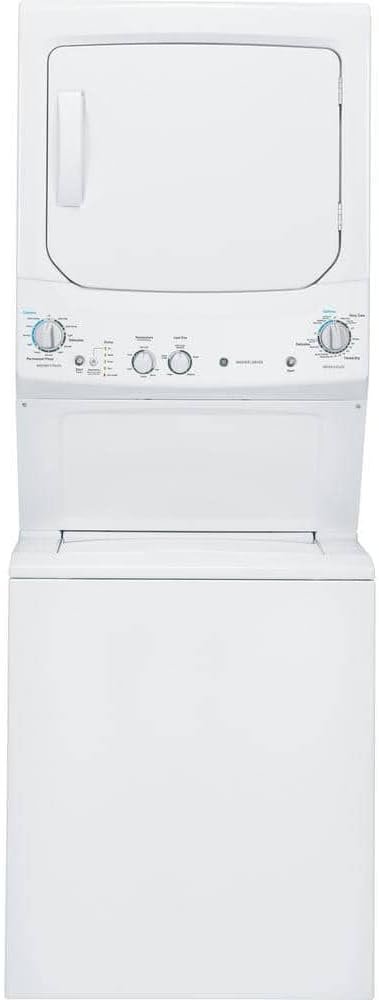
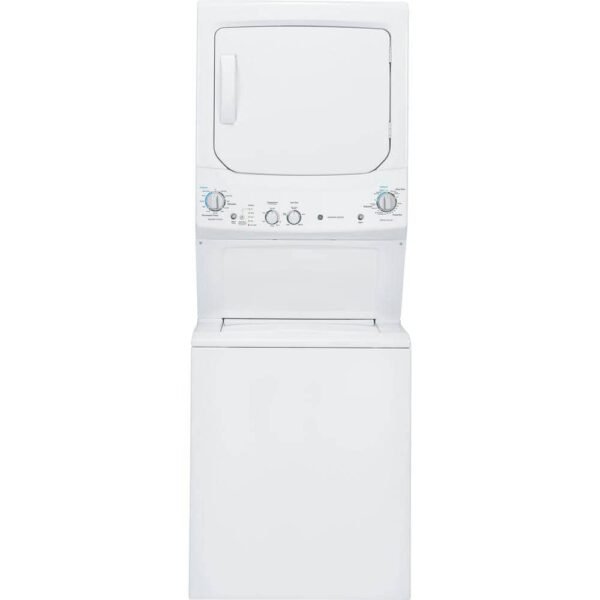
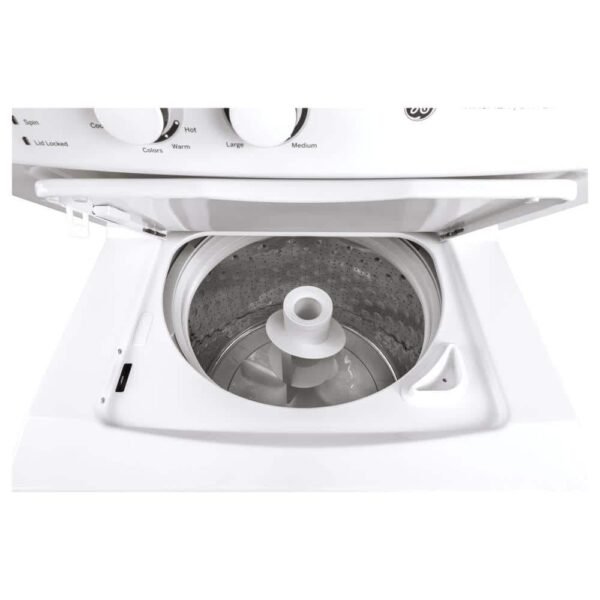
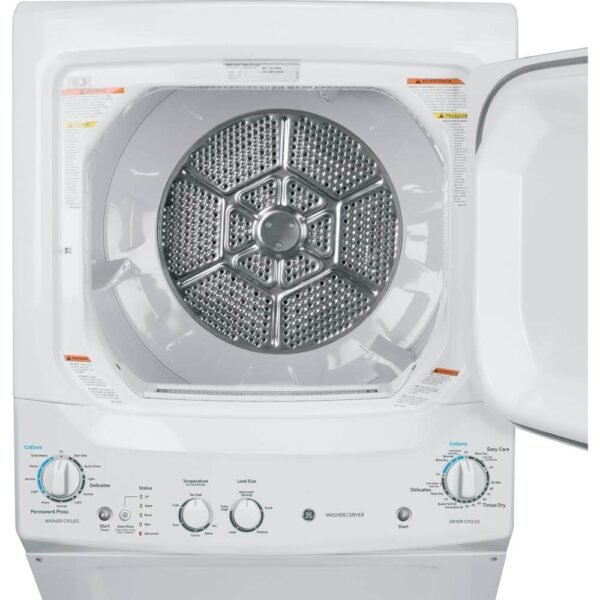
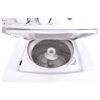
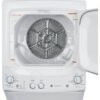
A unitized laundry center is a washer and a dryer built into a single tall cabinet at the factory, and GE has been calling this format Spacemaker for decades. It is not a combination machine: there are two separate drums doing two separate jobs, stacked, sharing one cabinet and one set of controls. This one pairs a 3.8 cubic foot washer with a stainless steel basket and a 5.9 cubic foot electric dryer, in a cabinet listed at 30.88 by 26.75 by 75.88 inches, weighing 249 pounds. Where it fits is a laundry closet too narrow for two machines side by side and not tall enough or not suitable for a stacking kit, which describes a great many apartments and older houses.
Living with it day to day
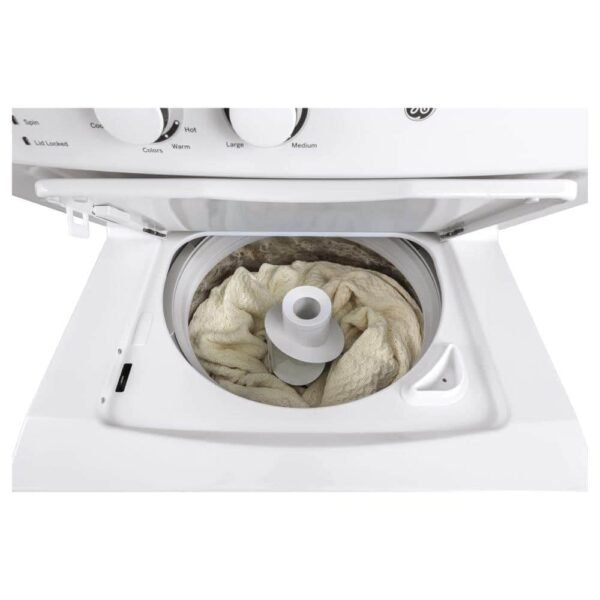
The capacities are the honest limitation and should be understood before buying. A 3.8 cubic foot washer is small by current standards, where 4.5 to 5.2 cubic feet is the mainstream, so a king comforter is not going in this machine and a family’s weekly wash will be several loads rather than two. What it buys in return is a machine that fits where nothing else does, and 5.9 cubic feet of dryer against 3.8 cubic feet of washer is a well matched pair, so a full wash load dries in one go without splitting.
Eleven wash cycles are provided, and GE describes automatic load sensing on the washer so water level follows the load rather than a fixed fill. The up front lint filter is a small detail with a real daily effect: on many stacked arrangements the dryer lint screen sits at the top of the machine where a shorter person cannot comfortably reach it, and a lint screen that is inconvenient is a lint screen that does not get emptied, which is both an efficiency and a fire safety issue. GE publishes no decibel rating. The related models in this family, the GE GUD24ESSMWW and the gas fired GE GUD27GSSMWW, cover the same idea at a different width and with a different fuel.
Controls and connected features
There is nothing connected here at all, and the control description is worth quoting because it is unusually specific: rotary electronic controls on the washer and rotary electromechanical controls on the dryer. In plain terms, both halves are operated with a dial. There is no app, no WiFi, no touchscreen and no account, and the practical consequence is that everything is operable by anyone without instruction, which matters in a rental property or a shared house where the machine will be used by people who did not buy it. A dial is also the most repairable interface in laundry: a mechanical timer or a rotary switch is a part a technician can replace, where a failed touch panel usually means a control board.
What is lost is the usual list: no notification when a cycle finishes, no remote start, no remote diagnostics. On a machine likely to be a few steps away in an apartment, the first of those is not much of a loss. Buyers who specifically want connectivity in this format will not find it here and should look at the tower designs such as the LG WKEX200HWA, which put a connected panel between the two machines.
Running cost and upkeep
Two facts are missing from this listing and both are important. The fuel type is stated as electric, but no voltage, no amperage and no circuit specification appears anywhere. An electric dryer is the appliance in a home most likely to require a dedicated high amperage circuit rather than an ordinary outlet, and whether a particular laundry closet already has one is the question that decides if this machine can be installed at all. That figure must come from GE’s installation manual and be checked against the existing receptacle before ordering, with an electrician consulted if they do not match. Nothing about the fuel type field answers it.
The venting requirement is also unstated. A conventional electric dryer needs a duct to outside, and the listing neither confirms nor denies that this one does, so it should be established from the manual before assuming a closet with no exterior wall will work. Water supply and drain requirements for the washer half are likewise unpublished. On the ongoing side, there are no consumables and no filters to buy: upkeep is emptying the lint screen every load, clearing the vent duct periodically, and keeping the washer drum and dispenser clean. A top loading washer of this type is less prone to the gasket odor problem that front loaders have, which is one genuine advantage of the format. No annual energy figure is published, so running cost cannot be calculated. Other unitized and stacked options appear across the dryers section, alongside standalone machines such as the GE GTD42EASJWW.
Highlights
- A washer and dryer in one cabinet, factory built rather than stacked with a kit.
- Fits laundry closets where two separate machines cannot go.
- Eleven wash cycles with automatic load sensing on water level.
- Rotary dial controls on both halves, with no touchscreen and nothing to configure.
- An up front lint filter that can be reached without stretching over the machine.
- Stainless steel wash basket rather than porcelain or plastic.
Things To Consider
- No voltage or amperage is published for an electric dryer, which is the decisive installation figure.
- The venting requirement is not stated anywhere in the listing.
- A 3.8 cubic foot washer is small by current standards.
- Water supply and drain requirements for the washer half are unpublished.
- No annual energy consumption figure and no decibel rating are given.
- A single cabinet means a fault in either half involves servicing the whole unit.
Who it is not for
A family washing bedding and bulky items will find 3.8 cubic feet frustrating, and should buy full size machines if the space exists. Anyone whose laundry space has only a standard household outlet needs to resolve the electrical question before ordering, since the listing provides nothing on it. Households wanting app notifications will not get them here. And anyone with an interior closet and no vent route should confirm the venting requirement first, or look at a ventless machine such as the LG WM6998HBA instead.