

Description
What this COSTWAY twin tub is and where it fits
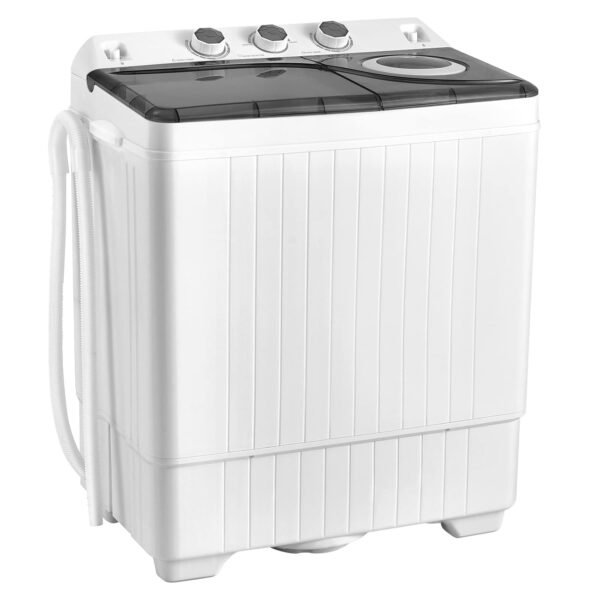
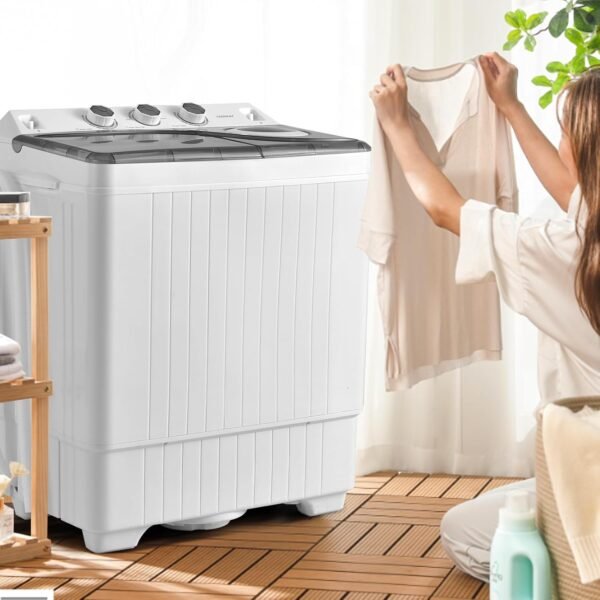
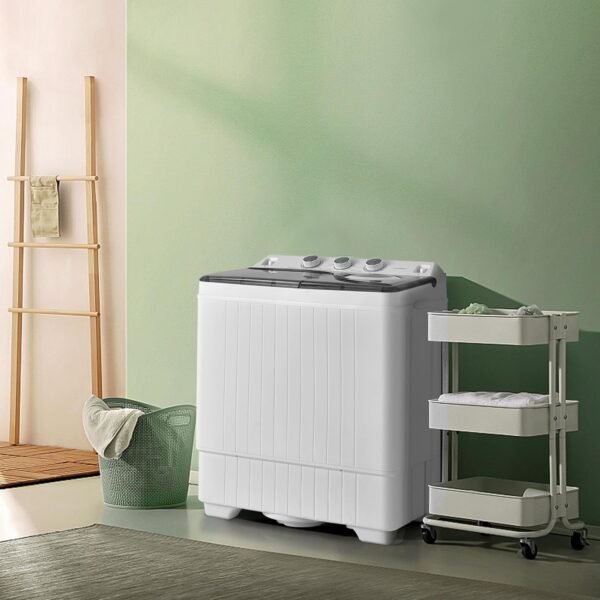
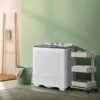
A twin tub washer is a design that predates the automatic washing machine and survives because it solves a specific problem: doing laundry where there is no plumbing for a real machine. This COSTWAY unit measures 16 by 27.5 by 32 inches, weighs 33.5 pounds and is built from ABS and polypropylene, which is why one person can move it. It has two separate tubs side by side, one that agitates and one that spins, and the user moves the laundry between them by hand. It belongs in a dorm room, a studio apartment, a boat, a small recreational vehicle or a laundry room being used as a backup, and it is not a substitute for a plumbed machine in a house that has room for one.
Living with it day to day
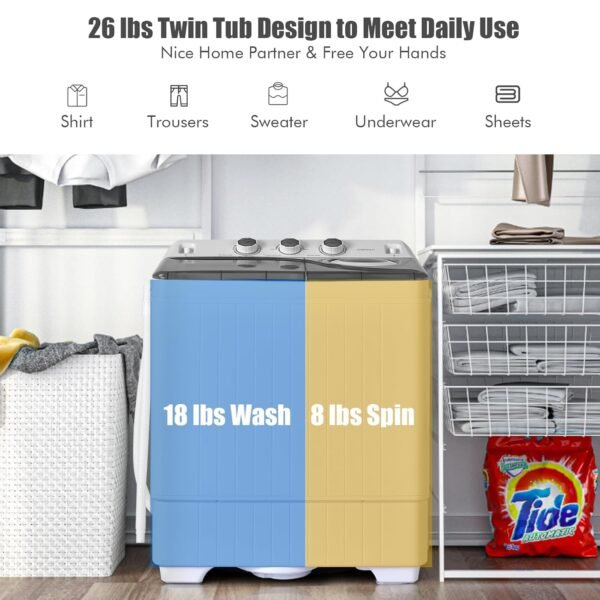
The capacity figure needs unpacking, because the listing states it two ways. The headline is 26 pounds, and the detail is 18 pounds in the wash tub and 8 pounds in the spinner. Those are not the same thing: the machine cannot wash 26 pounds, it washes 18 and spins 8, and adding them together is a marketing convention rather than a usable number. In practice the spin tub is the constraint, because an 18 pound wash has to be spun in two or three batches. Realistically this handles a few days of clothing for one or two people at a time, not a family’s weekly load.
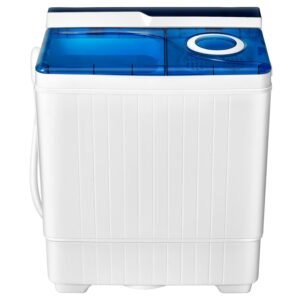
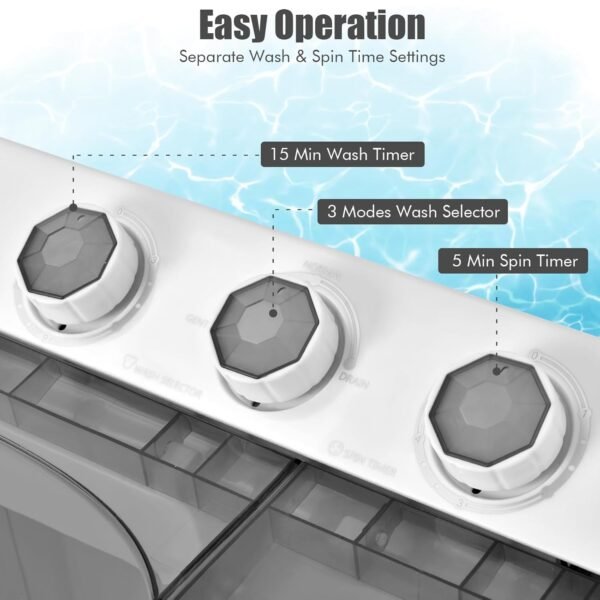
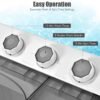
The working routine is genuinely hands on and worth describing honestly. Water goes in by hose or bucket, the wash timer is set by knob, the load agitates, then the user lifts wet laundry across into the spin tub, spins it, and drains. There is no water heating in a machine of this type, so wash temperature is whatever comes out of the tap. There is no load sensing and no automatic sequencing. The advantage of that arrangement is that the two tubs run independently, so a second load can be washing while the first one spins, which makes the total time for several loads much shorter than a single tub machine would manage. COSTWAY publishes no decibel rating, and a spin tub at speed in a plastic cabinet is not a quiet appliance. The listing includes a drain hose, and drainage on this version is by gravity, so the machine has to sit above the drain point. The sibling COSTWAY twin tub in blue lists a drain pump, which removes that constraint.
Controls and connected features
There is nothing electronic here beyond a pair of mechanical timers. Control is by knob: a wash timer and a spin timer, and that is the entire interface. Nothing is connected, nothing needs configuring and nothing can fail in software. For an appliance likely to spend time in storage, in a vehicle or in a shared house, a mechanical timer is more robust than a control board, and it is repairable in a way an electronic panel is not. The corresponding reality is that nothing is automatic: there is no cycle that fills, washes, drains, rinses and spins on its own, and every one of those steps is a decision the user makes. Anyone expecting the set and forget behavior of a plumbed machine such as the LG WM3400CW will find this a considerable step backward in convenience, which is the trade for portability.
Running cost and upkeep
The electrical facts are published and straightforward: 420 watts at 120 volts, which is an ordinary household plug load with no dedicated circuit implied and no hardwiring, gas or venting involved. That 420 watt figure covers the motors only, because there is no heater, and it is a fraction of what a plumbed washer draws for the simple reason that heating water is what costs money in laundry. Running this machine on tap cold water is cheap in electricity terms, and that is the honest economic case for it alongside the portability.
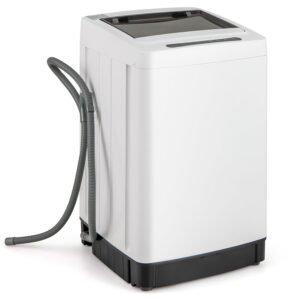
There is no permanent water connection and no drain connection, which is the whole point, but it means every load involves filling and emptying by hand or hose. Upkeep is minimal and mostly about drying: a plastic tub left wet with the lid closed will smell within days, so the tubs need to be left open to air, and the machine should be drained completely before storage. There are no filters, no consumables and no cleaning cycle. The parts most likely to fail are the timer knobs and the drain hose connection, and neither is typically serviceable, so a machine at this price is effectively disposable. One listing oddity is worth flagging: the color field contains the entire marketing description rather than a color, and the model number field simply reads Portable Washing Machine, so this unit cannot be identified by model at all, which makes it hard to buy replacement parts or to tell it apart from the other COSTWAY machines in the same portable washers category, one of which is the very different fully automatic 11 pound COSTWAY portable washer.
Highlights
- No plumbing required, so it works in a dorm, a studio, a boat or a vehicle.
- Electrical requirement is published clearly at 420 watts and 120 volts.
- Twin tubs run independently, so one load spins while the next one washes.
- At 33.5 pounds one person can move it and store it between uses.
- Mechanical timers rather than a control board, with nothing to configure.
- Low running cost, because there is no water heater in the machine.
Things To Consider
- The 26 pound headline adds an 18 pound wash tub to an 8 pound spinner, which is not a real capacity.
- Every step is manual, including moving wet laundry between the two tubs.
- No water heating, so wash temperature is whatever the tap provides.
- Gravity drain only on this version, so the machine must sit above the drain point.
- The model number field reads Portable Washing Machine, so the unit cannot be identified for parts.
- The color field contains the full marketing sentence rather than a color.
Who it is not for
A family should not attempt to run its laundry through this, because the spin tub alone would make it a multi hour job every time. Anyone with plumbing available and floor space for a real washer is choosing inconvenience for no reason. It is not suitable for anyone who needs hot water washing, since the machine has no heater. It is a poor choice for someone who cannot lift wet laundry repeatedly, which is a genuine consideration. And anyone who needs to drain into a sink above the machine needs the pump equipped version, since this one relies on gravity. Full size alternatives, including compact plumbed machines, sit in the Amana NTW4519JW class of top loader.