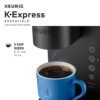
Description
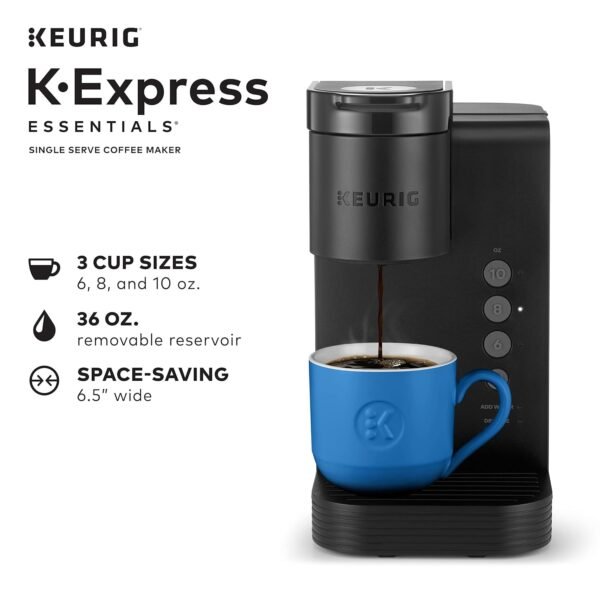
This is the third listing for the Keurig K-Express on this site, and it is the one with the most useful measurement and the least reliable data. It records the machine at 6.5 inches wide, which is genuinely narrow for a pod brewer with a removable tank, and it records a reservoir capacity that disagrees with the other two listings for the same machine. Both facts are worth having before ordering.
What it is and where it fits
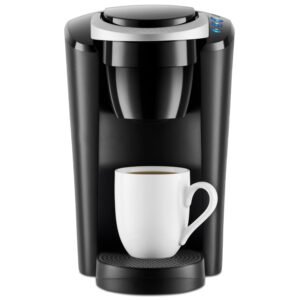
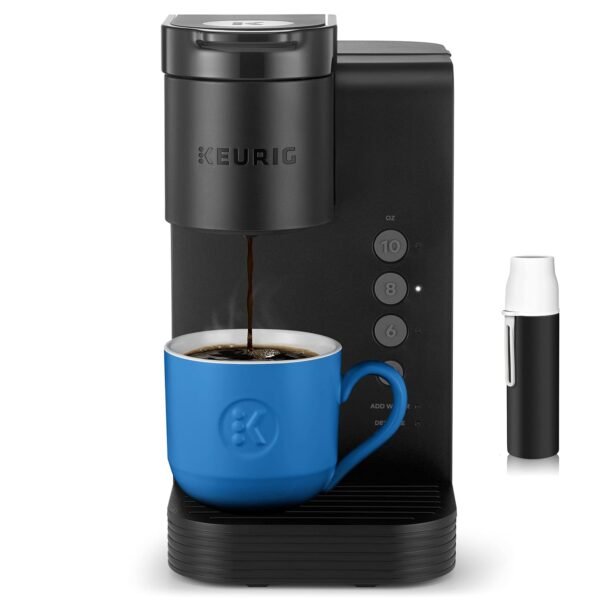
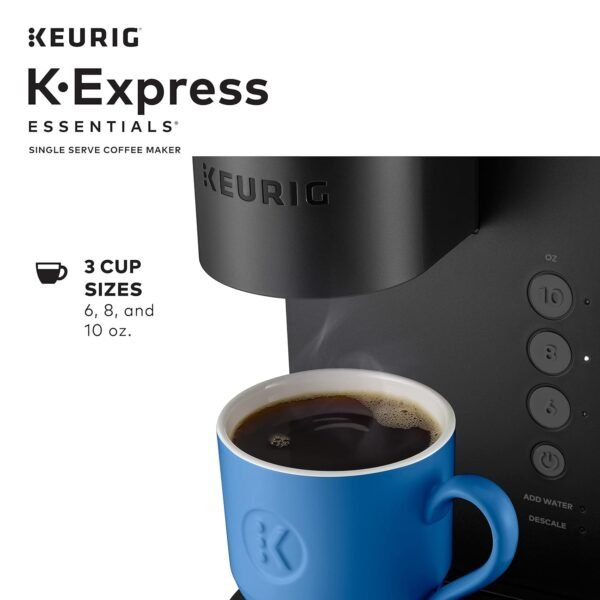
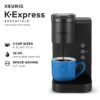
The K-Express brews one K-Cup pod at a time in three sizes with a strong brew option. There is no carafe, no clock and no milk system. It suits a kitchen where people drink at different times or drink different things, a home office, or a spare room, because nothing is brewed until someone asks and nothing sits going stale.
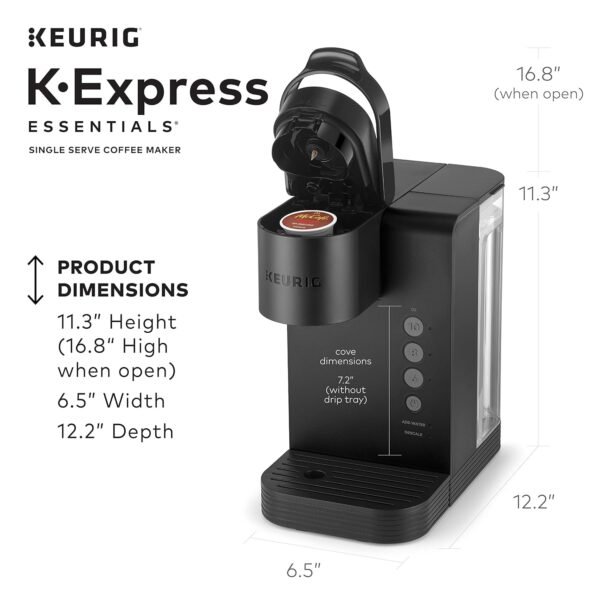
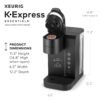
The width is the reason to consider this specific record. At 6.5 inches wide, 12.2 inches deep and 11.3 inches high it slots into gaps that most machines will not, including the strip beside a refrigerator or between a wall and a toaster. The listed weight of 4.5 pounds means it can be lifted with one hand to clean under it, which is a small thing that matters on a crowded counter.
Living with it day to day
The reservoir figure is the problem. The product copy on this listing describes a 36 ounce removable reservoir, while the other two K-Express listings on this site both record 42 ounces or its metric equivalent. Those cannot all be right for the same machine. Thirty six ounces is three of the largest cups before a refill, forty two is three and a half, and in daily use the difference is one extra trip to the sink a week. Treat 36 as the conservative planning figure.
Back to back brewing is the feature the product copy leads on, meaning the machine does not need a reheat pause between cups. For a household where two people leave at the same time that is the difference between a queue and no queue. The used pod still has to be lifted out between brews and the drip tray still fills.
Everything else follows the pattern of the range. Three cup sizes drawn from a fixed dose, so the largest cup is the weakest. No clock, so nothing can be scheduled. No carafe, so a group means a sequence of brews, which is the case for keeping something like a 14 cup drip machine for weekends. Noise is not published and is dominated by a pump that runs under a minute.
Controls and connected features
Buttons only. Cup size, strong brew and power, with no display and no menu. There is no app, no Wi Fi, no Bluetooth and no account anywhere on this listing, so nothing depends on a phone and nothing can be withdrawn in a software update.
The operation mode field says fully automatic, which describes the brew cycle rather than any scheduling ability. There is nothing to configure, nothing to pair and nothing to log into, and for a machine at this level that is the correct set of decisions. Anyone who actually wants scheduling has to move up the range to a model with a clock, and anyone who wants phone control has to move all the way to the K-Supreme Plus Smart.
Running cost and upkeep
Voltage is recorded as 120 volts on this listing, which is correct for a North American machine and is more than the other two K-Express records manage. This is a plug in countertop appliance with no water line, no drain, no gas and no venting. Wattage and amperage are not published, so the rating plate is the reference.
Pods are the running cost and they dominate everything else. A pod brewer costs several times per cup what loose grounds cost, every day, for as long as the machine is in service. This particular listing records the coffee input as pods only and does not mention ground coffee, unlike the other K-Express record on this site. Keurig does sell a universal reusable filter separately that fits most of its brewers, and for anyone who drinks more than a cup or two a day that is the purchase that changes the math.
Maintenance is descaling and rinsing the tank. No descale interval is published. The listing’s data quality is poor in ways worth naming: invisible formatting characters are embedded throughout the attribute values, the item model number field says K-Cup rather than a model designation, the included components field contains only the number 1, and there is a card description field reading Integrated that means nothing on a coffee maker. The dimensions are also given twice in different orders on the same page. None of that changes the machine, but it is a fair warning about the rest of the block.
Highlights
- 6.5 inches wide, which is narrow enough for gaps most pod brewers will not fit.
- Back to back brewing with no reheat pause between cups.
- Removable reservoir so filling happens at the sink rather than by pouring into the machine.
- Correct 120V record on this listing, which the other two K-Express records do not provide.
- Light enough at 4.5 pounds to lift with one hand.
- No app, no account and nothing that can lose software support.
Things To Consider
- Reservoir capacity is given as 36 ounces here and 42 ounces on the other listings for the same machine.
- No clock, no timer and no auto start.
- The largest cup size is the weakest, since the pod dose is fixed.
- This listing records pods only, with no ground coffee option mentioned.
- The specification block is full of import artifacts, including a model number of K-Cup and an included components value of 1.
- The same machine appears on this site three times under different listings.
Who it is not for
Anyone who needs to serve four people at breakfast should buy a carafe machine, because four sequential brews is not a morning routine anyone keeps. Anyone who wants coffee ready at a set time needs a clock this does not have. Anyone with a serious objection to the cost per cup of pods should look hard at whether a reusable filter is available for it before buying, or step across to the coffee machines category where ground coffee is the default. And anyone who wants the smallest possible footprint should compare it against the K-Mini, which is narrower still but gives up the standing tank to get there.