Description
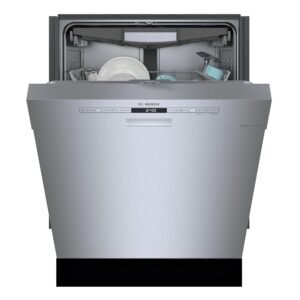
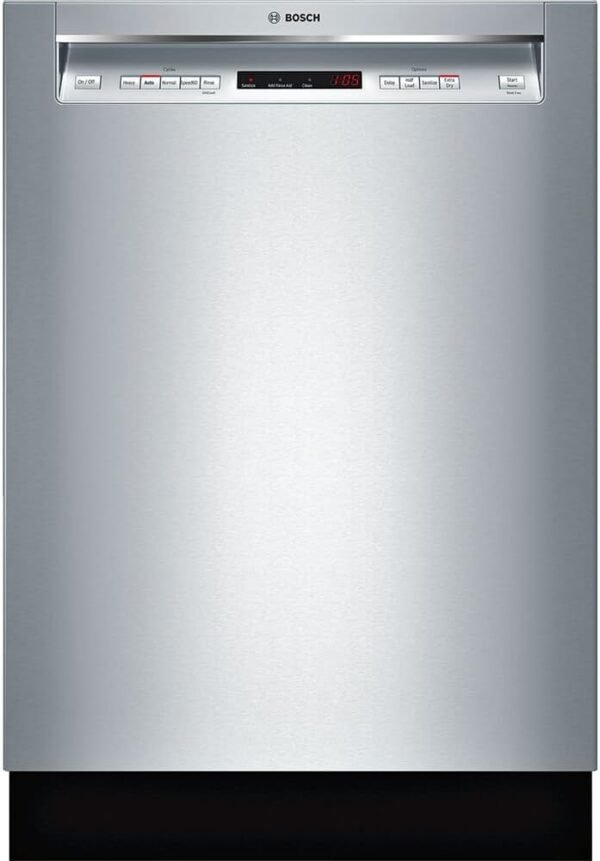
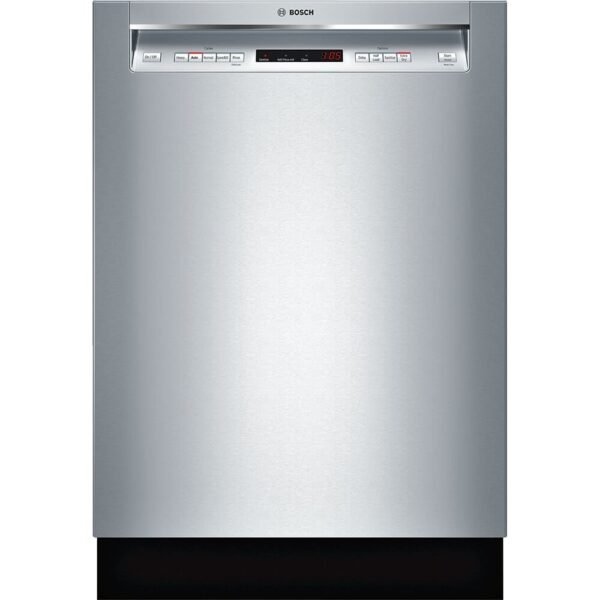
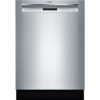
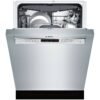
The Bosch SHEM63W55N is a 300 Series built in dishwasher, and the number that defines it is 44 decibels. Bosch records a 44 decibel noise level, 16 place settings, built in installation, dimensions of 23.56 inches deep by 23.75 wide by 33.88 tall, a stainless steel body and interior, a full console control layout, an adjustable plate spike and a user manual in the box. The listing description adds the PureDry drying system, a third rack and a tall tub stainless interior.
What it is and where it fits in a home
This is a standard 24 inch built in dishwasher that goes under a counter with a permanent water supply and drain connection. That is a different world from the countertop machines in this catalog such as the HAVA TDQR07: this one needs plumbing, it is not moving house with you, and it washes a genuine family load.
The 44 decibel figure is the reason to buy at this level rather than lower. In an open plan kitchen where the dishwasher runs while people are in the room, the difference between a 44 decibel machine and a 52 decibel one such as the Frigidaire FFBD1831US is the difference between background noise and something you talk over. Decibels are logarithmic, so eight of them is a substantial gap rather than a marginal one.
Living with it day to day
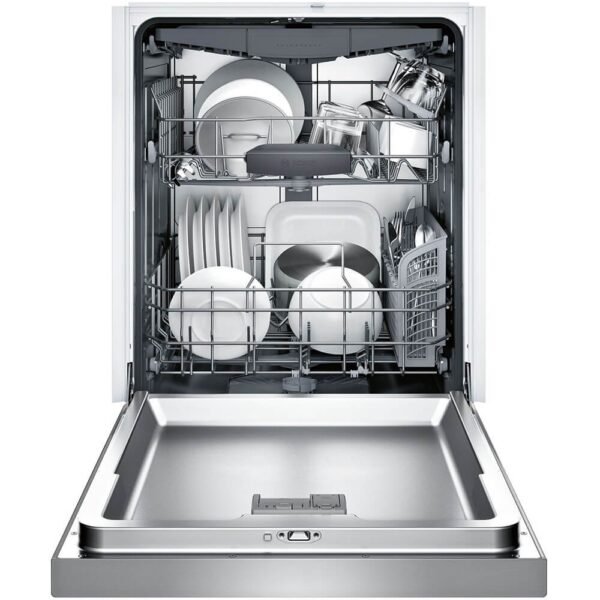
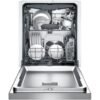
16 place settings is a large capacity, and in practical terms it means a household of four can run the machine once a day rather than twice. The third rack is what makes that number achievable: putting flatware and utensils in a shallow top tray frees the whole cutlery basket space in the lower rack for dishes. The listing describes it as adding around 30 percent more loading area, which is Bosch’s figure.
The adjustable plate spike in the lower rack is a small feature with a real effect: it lets tall or awkward items be secured rather than tipping over mid cycle, which is the cause of most of the redo washes people blame on the machine.
PureDry needs explaining honestly because it changes daily habits. Bosch uses condensation drying rather than a heating element: the stainless tub cools faster than the dishes, moisture condenses on the walls and drains away. It is quieter and uses less energy than an element, and it is genuinely gentler on plastics, which never melt or warp. The tradeoff is that plastics come out damper than they would in an element dried machine, and dishes benefit from a few minutes with the door cracked open at the end. Anyone moving from an American style heated dry machine will notice this, and it is the single most common complaint about Bosch dishwashers from people who did not know to expect it.
The tall tub stainless interior does double duty: it is the surface that makes condensation drying work, and it is the material that survives a decade of washing without staining or smelling.
Controls and what works without an app
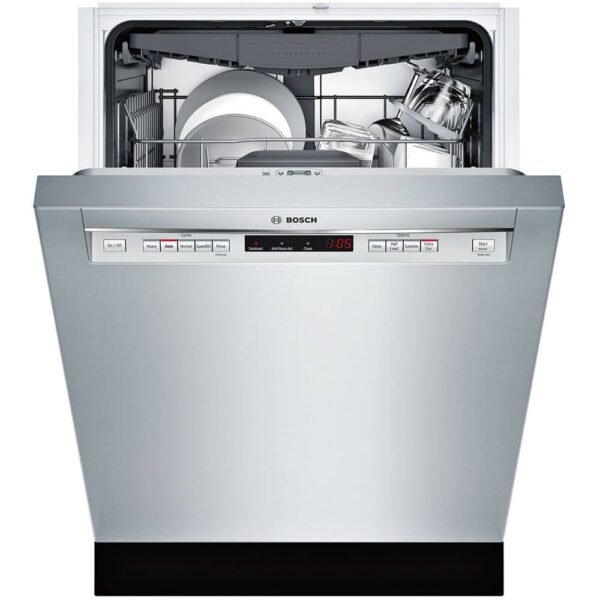
The control layout is listed as a full console, which means the controls sit on the front face of the door rather than hidden on the top edge. That is a practical rather than aesthetic decision. A full console lets you see the cycle status and change a program without opening the door, at the cost of the seamless look that a hidden top control panel gives.
Bosch publishes no Wi-Fi, no Home Connect and no app for this model, unlike the Bosch SHE53B75UC in the same family which does. Everything here works from the panel with power and water and nothing else. On an appliance built into cabinetry for ten to fifteen years, an interface with no software dependency has an obvious argument in its favor.
Running cost and upkeep
Detergent and rinse aid are the routine consumables. Rinse aid matters more on a condensation drying machine than on a heated dry one, because it helps water sheet off the dishes rather than bead, which is what makes drying work without an element. Skipping it is the second most common cause of complaints about drying performance.
The filter in the base of the tub needs cleaning periodically, and Bosch machines use a manual filter rather than a food grinder, which is why they are quiet and why the filter needs attention. The spray arms, the door seal and the rack rollers are the other parts that need occasional care.
Bosch does not publish an annual energy consumption figure, a water use per cycle figure or an Energy Star statement on this listing, which is a gap given those are the numbers most buyers want in this category. Other Bosch machines in this catalog do publish an annual figure, so the data exists for the brand and is simply missing here, and the Bosch SHPM78Z55N in the same family adds a CrystalDry drying system that this model does not have. On the electrical side, no voltage or amperage is published here either. A built in dishwasher needs a dedicated supply and a specified circuit, and none of it can be taken from this listing, so the installation manual is the source and the electrical work should be specified from it rather than assumed.
Highlights
- 44 decibels, quiet enough to run in an open plan kitchen while people are in the room.
- 16 place settings with a third rack, so a family of four can run one cycle a day.
- Condensation drying is gentler on plastics and uses no heating element.
- Stainless tall tub, which is what makes the drying system work and lasts.
- Full console controls, so status is visible without opening the door.
Things To Consider
- Condensation drying leaves plastics damper than a heated dry machine, which surprises people.
- Rinse aid is effectively required rather than optional for drying to work well.
- No annual energy figure, water use figure or Energy Star statement is published.
- No voltage or amperage is published, so the circuit must come from the installation manual.
- No connected features, unlike other machines in the same Bosch family.
Who it is not for
Renters and anyone without a plumbing connection cannot use this at all, and the countertop dishwasher category is the alternative. Anyone who wants plastics bone dry straight out of the machine should look for a heated dry system instead, or accept the door cracking habit. Households wanting remote start and cycle notifications need a connected model. And anyone comparing running costs across the built in category will find this listing unusually short on the figures needed to do it.