Description
What the GUD27GSSMWW is and where it fits
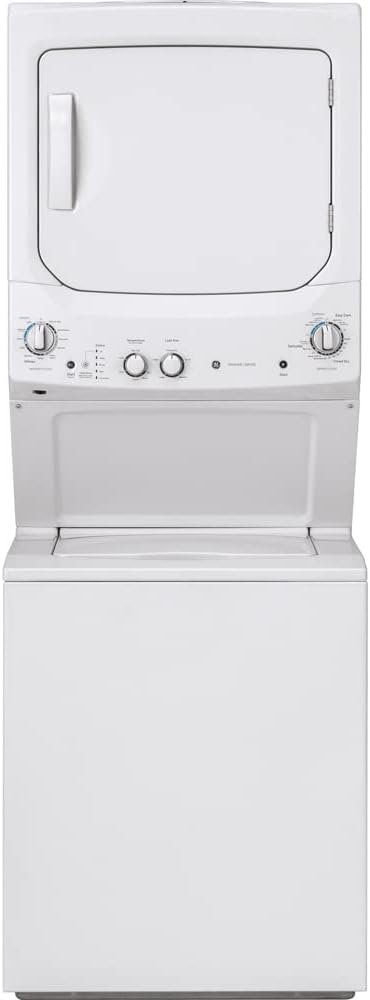
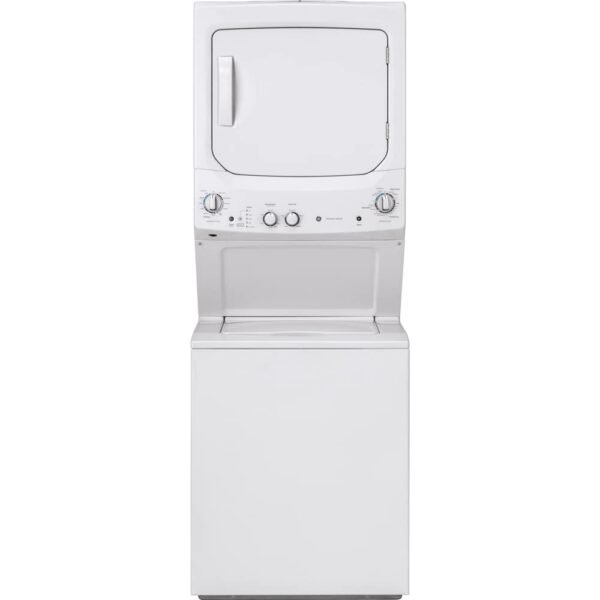
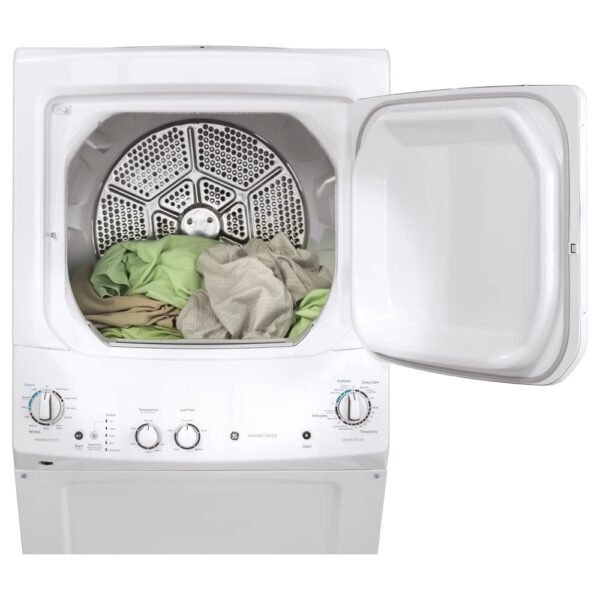
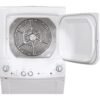
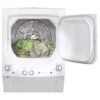
A unitized laundry center is a washer and a dryer built into a single tall cabinet at the factory, and GE has been making this format for decades under the Spacemaker name. It is not a combination machine: there are two separate drums doing two separate jobs, sharing one cabinet and one control area. This is the 27 inch version, weighing 251 pounds, and it belongs in a laundry closet too narrow for two machines side by side and not suitable for a stacking kit, which describes a great many apartments and older houses.
Living with it day to day
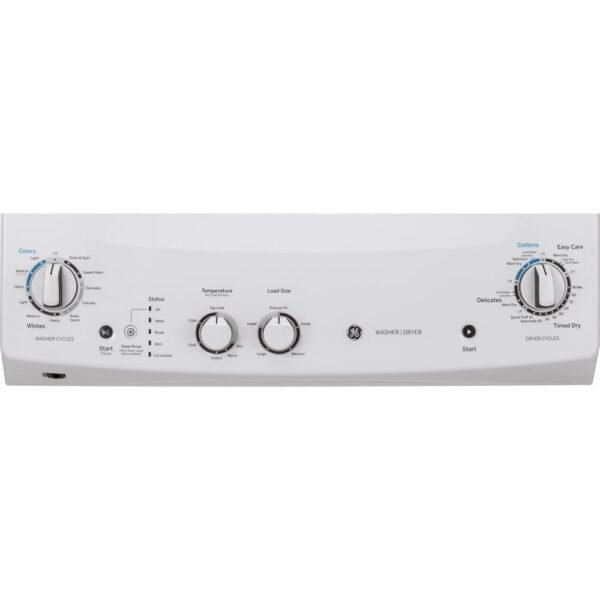
Eleven wash cycles and three drying cycles is the split here, and three drying cycles is a short list even for a laundry center. The dispenser is single compartment, detergent only, so fabric softener and bleach have to be added by hand at the right point in the cycle rather than loaded once at the start. That is a real daily difference from a machine with a multi tray dispenser, and it is the kind of thing that only becomes apparent after purchase.
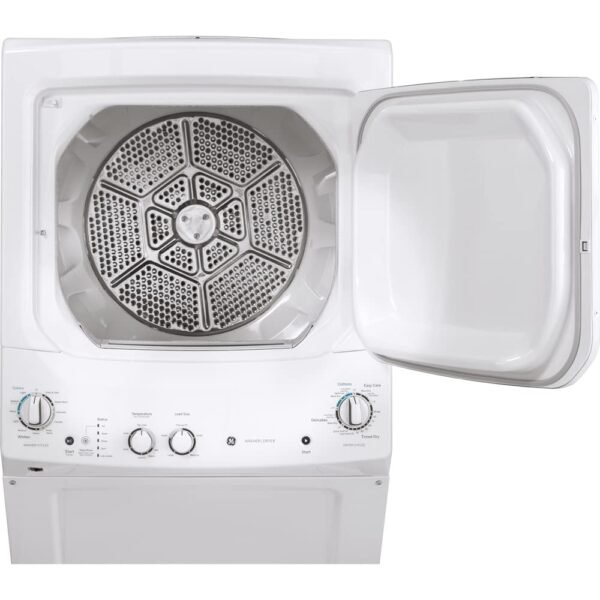
The published figure worth having is the maximum depth with the door open, given as 30.88 inches. That is the measurement that decides whether a closet door will close behind the machine, and it is more useful than the cabinet depth on its own. GE publishes no decibel rating. A top loading washer of this type has no rubber door gasket, which removes the mould and odor maintenance that front loaders demand, and that is a genuine advantage of the format. It also means the lid can be opened part way through a cycle to add something that was missed, which no front loading machine allows once the drum has filled, and in a small home doing frequent small loads that turns out to matter more often than the specification sheet suggests. The narrower GE GUD24ESSMWW covers the same idea at 24 inches with smaller drums, and the GE GUD27ESSMWW is the electric sibling at this width.
Controls and connected features
Nothing in this listing describes WiFi, an app or any connected service, and for a laundry center destined for a rental property or a small apartment that is the right specification. Anyone can operate it without instructions, nothing needs an account when the household changes, and there is no firmware and no platform that can be retired. Over the fifteen years a laundry center may sit in a closet, that simplicity is worth more than a notification.
What is absent is a cycle end notification, remote start and remote diagnostics. In a small home where the laundry closet is a few steps away, the first matters least. Anyone who wants connectivity in a single unit format should look at the tower designs such as the LG WKEX200HWA, which put a connected panel between the two machines, and accept the higher price and the additional electronics.
Running cost and upkeep
There is a contradiction in this listing that has to be resolved before anything is connected. GE’s model numbering conventionally uses a G in this position to denote a gas dryer, and the product description in this same listing reads unitized washer and electric dryer. Those point in opposite directions, and the difference is not cosmetic: a gas machine needs a gas supply with a shutoff valve plus an ordinary electrical connection, while an electric one needs a dedicated high amperage circuit and no gas at all. No voltage, no amperage, no wattage and no gas specification appears anywhere in the data to settle it. The fuel type must be confirmed from GE’s own model documentation before ordering, and the connection made by a qualified installer.
The venting requirement is also unstated. A conventional dryer of either fuel vents to outside through a duct, so a closet with no exterior wall route should be treated as a problem until the manual says otherwise, and no duct diameter or maximum run is published. Water supply and drain requirements for the washer half are likewise absent. On the ongoing side there are no consumables: upkeep is emptying the lint filter every load, clearing the vent duct periodically as a fire safety task, and keeping the washer drum and dispenser clean. Three data faults deserve naming: the product dimensions read 1 by 1 by 1 inches, which is not a measurement of anything; the finish type reads Chrome on a white appliance; and the special features field reads Inbuilt Wool, which is not a feature of any washing machine. Other formats sit across the washers section, and standalone dryers include the GE GTD42EASJWW.
Highlights
- A washer and dryer in one factory built cabinet, with no stacking kit required.
- Fits a 27 inch laundry closet where two separate machines cannot go.
- Eleven wash cycles and a stainless steel wash basket.
- Maximum depth with the door open is published at 30.88 inches.
- No door gasket on the washer, so none of the front loader mould maintenance.
- No app or account, so anyone can operate it and nothing can be discontinued.
Things To Consider
- The model suffix suggests gas while the description says electric, and neither is confirmed.
- No voltage, amperage, wattage or gas specification appears anywhere in the listing.
- The venting requirement, duct diameter and maximum run are all unstated.
- Product dimensions read 1 by 1 by 1 inches, which is a plain data fault.
- Only three drying cycles, and a single compartment dispenser for detergent only.
- The finish field reads Chrome on a white appliance and the features field reads Inbuilt Wool.
Who it is not for
Anyone with room for two separate machines will get more capacity, faster laundry and cheaper individual repairs from a pair. Households that wash bedding regularly will find a laundry center’s drums limiting. Interior closets with no exterior wall need the venting question resolved first. And nobody should order this without establishing the fuel type from GE directly, because a machine delivered expecting the wrong connection is an expensive mistake and, in the gas case, a safety matter rather than an inconvenience.